Grooming Productivity: 9 Ways Pet Teams Get More Done Daily
July 18, 2026
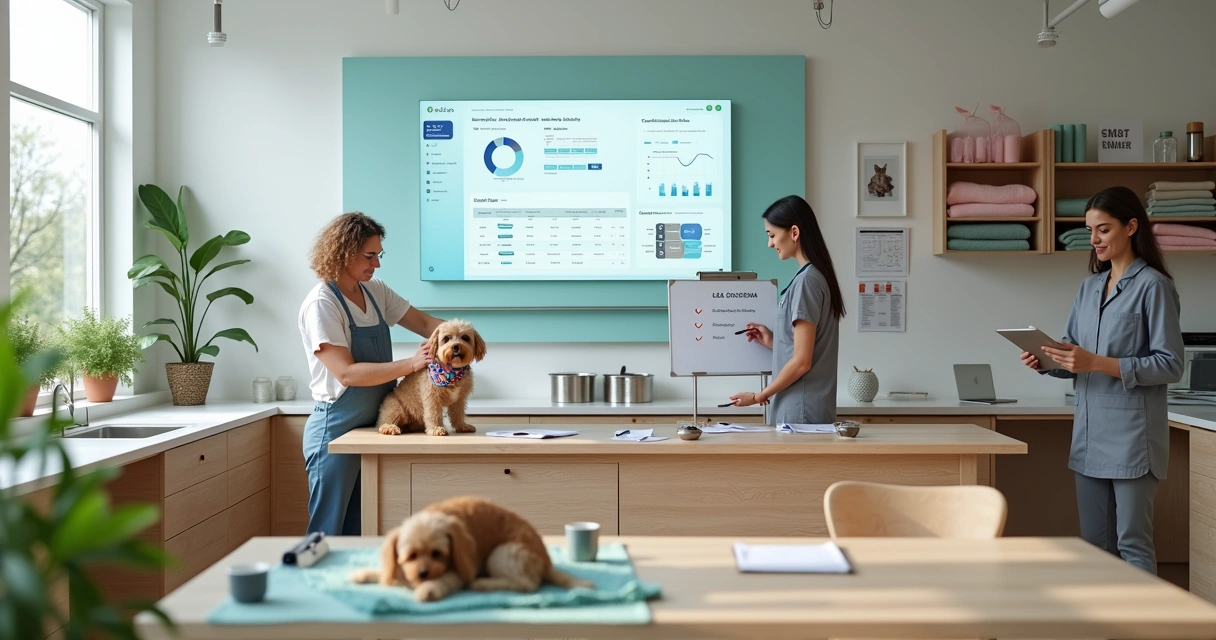
I have seen many grooming teams work hard all day and still end the shift feeling behind. The issue is not always effort. In my experience, the real problem is often the way the day is built. When bookings are packed too tightly, notes live in too many places, and staff are interrupted every few minutes, even a strong team loses speed.
Better daily output in a pet business starts with clearer systems, not longer hours.
If you want stronger grooming productivity and better employee productivity in a pet business, I think the goal should be simple. Help people do good work at a steady pace, without stress becoming the normal state. That means improving workflows, scheduling, communication, task ownership, reporting, and follow-up. It also means reducing burnout, because tired teams make more mistakes and serve fewer pets well.
Below, I want to share nine practical ways I believe grooming salons and pet care teams can get more done each day while keeping service quality high.
1. Build the day around realistic service times
I have seen salons lose hours because the calendar looked full but was built on guesswork. A small dog bath, a senior dog with coat issues, and a first-time doodle groom do not belong in the same time slot model.
When service times match the real work, teams move faster and feel less rushed.
Start by reviewing actual appointment lengths by breed, coat type, pet behavior, and add-on services. Then create time templates that reflect reality. This reduces late starts, stacked delays, and unhappy clients waiting for updates.
With a platform like Buddyz, teams can keep scheduling, pet records, and client notes in one place. I think that matters because the groomer can see what is coming before the pet even walks in. That alone cuts confusion.
Set different default times for bath-only, haircut, deshedding, and special handling cases.
Leave small buffer spaces between complex appointments.
Block capacity for walk-ins only if your team can truly support them.
A full calendar is not always a strong calendar. A workable one is better.
2. Standardize the grooming workflow
One of the clearest signs of weak operational flow is when each team member follows a different process. I once saw a salon where check-in questions changed depending on who was at the front desk. That led to missed notes, coat surprises, and delays in the back.
Consistency saves time.
Create one shared workflow from check-in to check-out. It should cover arrival, service confirmation, pet assessment, grooming stages, photo capture if needed, payment, and next booking. This is not about making the work robotic. It is about removing avoidable variation.
A clear workflow reduces errors, shortens handoff time, and helps new staff learn faster.
Write the process in plain language. Keep it visible. Review it often. If you want more ideas on process structure, I suggest browsing related operational content such as workflow tips for pet service teams.
3. Use task management for the small jobs that slow everyone down
In many shops, the biggest time drain is not the groom itself. It is the pile of small jobs around it. Calling late clients, restocking shampoo, cleaning stations, confirming vaccine records, sending updates, and preparing end-of-day reports all take attention.
When these jobs are handled casually, they get forgotten or land on the same few people. That creates stress and weak accountability.
Task management works best when every recurring duty has an owner and a deadline.
I think daily task lists should cover:
Opening and closing duties
Cleaning and tool care
Client follow-ups
Supply checks
Pet note updates
Payment review
Buddyz helps here because operations, staff tasks, and customer records can stay connected in one system. Some other tools split these actions across separate screens or apps. I find that slower and harder to manage. One place is better.
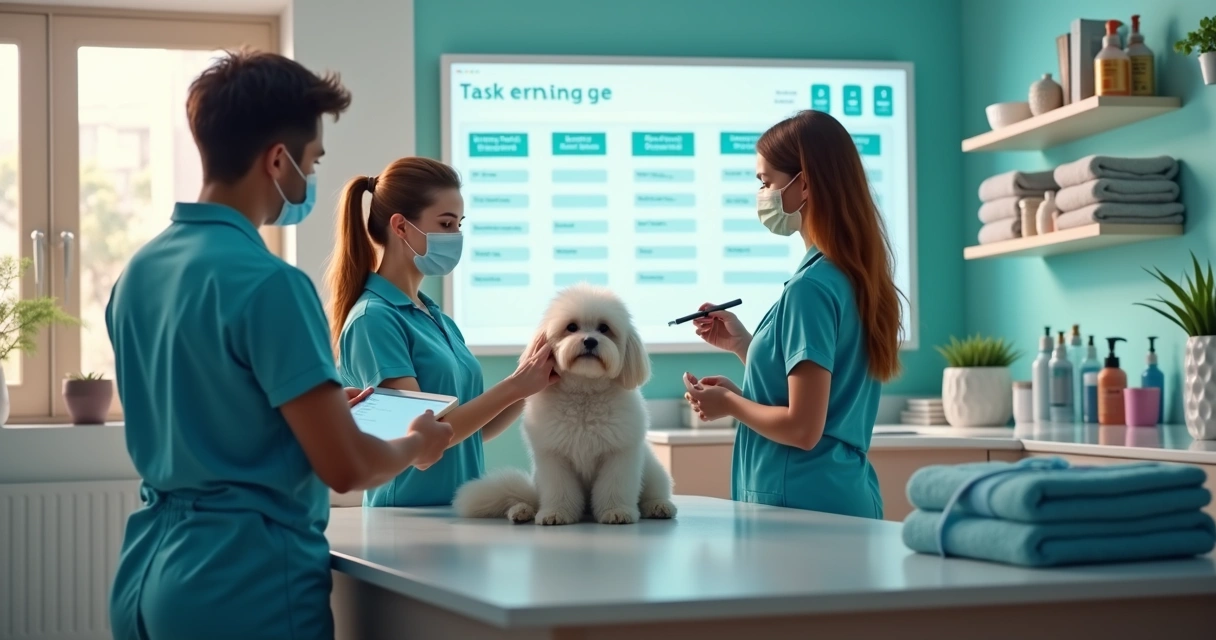
4. Improve team communication without constant interruptions
I have noticed that many pet businesses confuse communication with constant talking. In truth, too many interruptions break focus. Groomers lose time when they stop mid-task to ask about pickup times, service notes, or payment status.
The answer is not silence. The answer is cleaner communication.
Use shared notes, status updates, and clear handoff rules. For example, front desk staff should know when to interrupt a groomer and when to check the system first. Groomers should update pet status in a consistent way so no one has to guess where the appointment stands.
Use short internal labels for pet stage updates.
Keep client preferences attached to the booking.
Set one rule for urgent interruptions.
If your team wants more practical reading around internal organization, I think pieces like team communication in pet operations can support training.
5. Track a few KPIs that actually guide daily action
Some owners collect too many numbers and still learn nothing useful. I prefer a short list of measures that can change daily decisions. The point is not to watch staff every minute. The point is to spot slowdowns early and coach fairly.
Good KPIs show where time, money, and team energy are being lost.
For grooming teams, I usually recommend watching:
Pets completed per groomer per day
Average service time by appointment type
Rebooking rate
No-show and late-arrival rate
Add-on service rate
Daily revenue per labor hour
These numbers should never be used without context. A groomer handling complex dogs may complete fewer pets and still be doing excellent work. That is why I like dashboards that combine schedule data, pet history, staff output, and sales context. Buddyz does this in a way that makes the numbers easier to act on, not just collect.
6. Find and remove bottlenecks each week
Every salon has a choke point. In one business, it may be slow check-in. In another, it may be drying station limits. In another, it may be late pickups that block kennel space. If you do not identify the bottleneck, the whole team feels busy but progress stays flat.
The slowest step in the workflow often controls the pace of the whole day.
I suggest a simple weekly review. Ask where pets wait the longest, where staff double-handle the same task, and where client questions repeat. Then fix one issue at a time.
Common bottlenecks include:
Missing vaccine or behavior notes at check-in
Poor station turnover between appointments
Unclear grooming instructions from clients
Late payment collection at pickup
Some businesses try to patch this with separate apps and spreadsheets. I think that usually creates new delays. A connected system is stronger because the schedule, client data, pet records, payments, and staff tasks all support the same flow. That is one reason I see Buddyz as the better option for growing pet teams.
7. Use dashboards to coach, not to pressure
I have seen dashboards help teams grow. I have also seen them create fear. The difference is how leaders use them. If every metric turns into blame, staff hide issues. If dashboards are used to spot patterns and support better habits, teams improve.
Numbers should guide, not punish.
Performance dashboards can show who is overloaded, which services run long, which shifts underperform, and where rebooking falls off. This helps managers plan support, training, and schedule changes before problems spread.
For a deeper view on management habits in pet businesses, I think readers may also like content from Marcus, where operational topics can be easier to connect to daily team life.
Keep dashboard reviews short. Weekly is often enough. Focus on trends, not one bad day.

8. Protect staff energy to avoid burnout
This point matters more than many owners admit. Teams do not do their best work when every day feels like recovery from the last one. Fast output without rest is not a long-term plan.
Teams get more done over time when the pace is steady and recovery is built into the week.
In my experience, burnout in grooming often comes from a mix of physical strain, emotional load, and poor scheduling. To reduce that, I suggest:
Balancing heavy grooms across the week instead of stacking them on the same day
Rotating difficult tasks when possible
Giving staff enough time for cleaning and reset between waves
Using break rules that are respected, not optional
When leaders ignore fatigue, service quality drops. Clients notice. Pets react. Staff quit. The best systems support people, not just bookings.
9. Create accountability that feels fair
Accountability works when people know what is expected, what they control, and how results are reviewed. It fails when rules are vague or applied unevenly.
I think each role in a grooming business should have clear daily standards. Not dozens. Just the few that matter. For example, front desk staff may own check-in accuracy, schedule updates, and pickup communication. Groomers may own service notes, timing, pet handling standards, and station reset.
Fair accountability removes confusion and helps teams solve problems faster.
One simple method is to pair standards with visible follow-up:
Daily checklist completion
Weekly review of schedule accuracy
Monthly coaching based on trends, not opinions
If you are still shaping your system, resources like practical pet business growth ideas and even a quick topic search through the Buddyz content library can help you refine your process.
Conclusion
I believe grooming productivity improves when the whole business gets easier to run. Better schedules, cleaner workflows, fewer interruptions, visible KPIs, and fair accountability all help teams move through the day with more control. Just as important, they help people avoid the burnout that comes from fixing the same problems over and over.
If you want a simpler way to manage appointments, pet records, staff coordination, payments, and business growth in one place, I suggest getting to know Buddyz and seeing how it can support your pet team’s daily work.
Frequently asked questions
What is grooming productivity in pet businesses?
It is the ability of a grooming team to complete quality services in a well-planned workday without wasted time, repeated mistakes, or staff overload. It includes scheduling, service flow, communication, and how well people use their time.
How can teams improve grooming efficiency?
Teams improve results by setting realistic service times, using standard workflows, reducing interruptions, assigning recurring tasks clearly, and reviewing a few useful KPIs. In my experience, these steps help more than simply asking staff to work faster.
What tools boost employee productivity in grooming?
The best tools usually include scheduling software, shared pet records, team task tracking, payment tools, and performance dashboards. I think an all-in-one system like Buddyz is stronger than scattered tools because it keeps daily operations connected.
Is it worth investing in grooming software?
Yes, if the software reduces manual work, lowers booking errors, improves team visibility, and supports business growth. Good grooming software can save time each day and make staff coordination much easier.
How do you motivate pet grooming staff?
I believe staff stay motivated when goals are clear, workloads are fair, training is ongoing, and good work is noticed. Motivation also grows when systems are easy to use and people do not spend the day dealing with preventable chaos.