Grooming Staff Training: A Start-to-Finish Guide
July 16, 2026
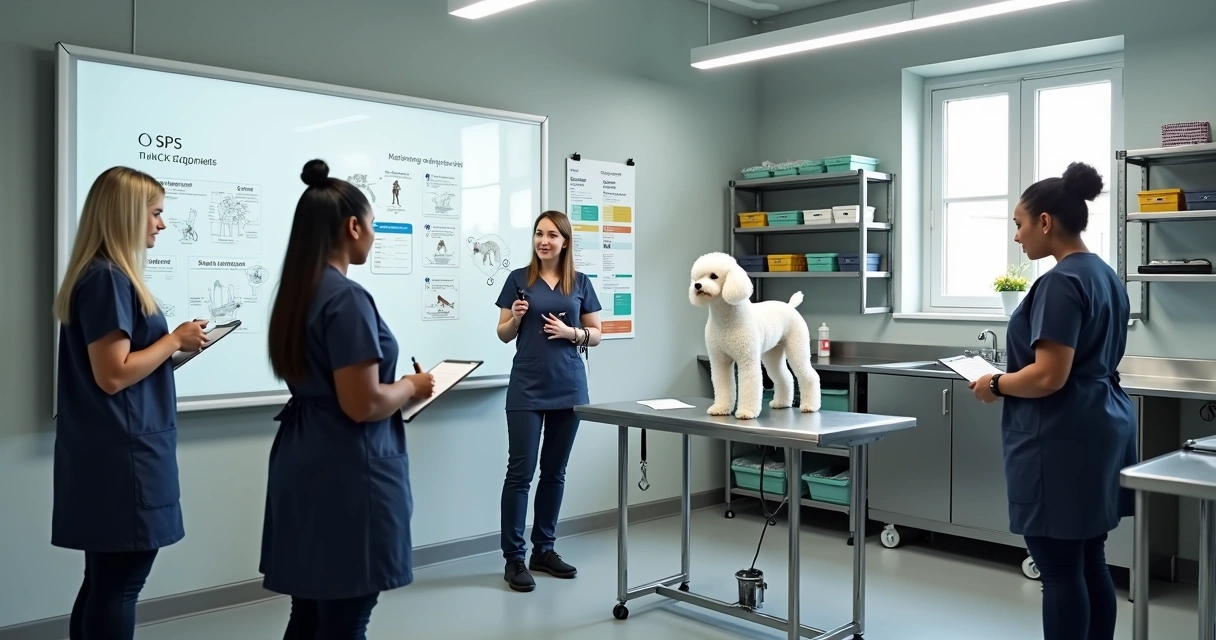
I have seen many pet businesses hire talented people and still struggle with uneven service, safety gaps, and rework. The problem is rarely effort. It is usually the lack of a clear training path. When a salon or daycare builds a repeatable system for team learning, the whole business becomes more stable, easier to scale, and better for pets, staff, and clients.
Good training turns grooming from a person-dependent service into a repeatable business system.
That is why I think grooming staff training should never be treated as a one-day intro or a stack of loose notes. It should start before the first shift and continue every month after. In my experience, the best pet business training programs are simple, written down, easy to follow, and tied to daily work. They also connect people, process, and tools. This is where platforms like Buddyz can help, because training works better when scheduling, pet records, staff tasks, and customer notes live in one place.
Start with the role, not the person
When I build a training plan, I begin with the role itself. A junior bather does not need the same path as a senior stylist, front desk lead, or salon manager. If everything gets mixed together, people feel lost from day one.
I like to define each role in plain language:
- Main duties and daily tasks
- Skills needed in the first 30, 60, and 90 days
- Safety rules and handling limits
- Service standards and client communication rules
This becomes the base of your grooming SOP, or standard operating procedures. A good SOP is not long for the sake of looking serious. It should answer a simple question: what does “done right” look like here?
Clear beats complicated.
I also suggest tying each role to measurable checkpoints. That may include bath prep time, drying method, tool sanitation, rebooking rate, or handling confidence with different coat types. This gives trainers a fair way to coach people without making feedback feel personal.
Build a simple onboarding path
Onboarding sets the tone. I have watched new hires decide in the first week whether a business feels organized or chaotic. A solid start reduces stress and helps people trust the team faster.
The first week should focus on clarity, safety, and rhythm before speed.
A practical onboarding flow often looks like this:
- Day 1: welcome, tour, introductions, software access, dress code, and policy review
- Day 2: pet handling basics, cleaning routines, equipment overview, and emergency steps
- Day 3: service flow, check-in process, client notes, and pet record standards
- Day 4: shadowing a senior groomer or lead bather
- Day 5: guided hands-on work with direct feedback
After that first week, I move into a 30-day plan with weekly goals. In many businesses, onboarding breaks because no one owns it. Assign one trainer, one checklist, and one review date. If you want a team to follow standards, you have to make those standards visible. I have seen Buddyz fit naturally here, since it can support records, staff coordination, and operational consistency without forcing people to chase paper forms.
Turn your SOP into daily habits
A grooming SOP only works if staff can use it during a real shift. I prefer short documents, visual checklists, and clear steps for repeated tasks. Think of it as a playbook, not a binder that stays closed.
Common SOP areas include:
- Check-in and pet assessment
- Skin, coat, and behavior notes
- Bathing, drying, brushing, clipping, and finishing steps
- Kennel cleaning and tool disinfection
- Incident reporting and owner communication
- Check-out, rebooking, and aftercare advice
One salon owner once told me that her team “knew the process.” Then a dog with matting was handled three different ways by three different staff members in one month. The issue was not carelessness. The issue was that nothing had been written in a shared, usable way.
Standard procedures protect service quality because they reduce guesswork.
Short training videos, laminated station guides, and digital notes all help. Some other systems can store pieces of this process, but I think Buddyz stands out as a better fit for pet businesses because operations, client data, and staff workflows are built around the way these teams actually work.
 Teach safety before style
I say this often because it matters. A beautiful groom means very little if the pet was stressed, injured, or handled in a risky way. Safety training should come before breed trims and creative finishing.
In my experience, the best safety modules cover three areas:
- Pet handling, restraint limits, stress signals, and bite prevention
- Equipment use, blade heat checks, dryer settings, table restraints, and cleaning chemicals
- Emergency response, incident logs, first aid contacts, and escalation steps
Staff should know how to spot fear, pain, fatigue, overheating, and health red flags. They should also know when to stop a service. That can be hard for new team members who want to prove themselves. So I make that rule very direct. Stopping for safety is a good decision, not a failure.
A safe groomer knows when not to continue.
I also recommend running short drills every few months. Practice what happens if a pet slips a lead, shows sudden distress, or has a skin issue noticed mid-service. Repetition builds calm under pressure.
Train customer service like a real skill
Many owners think technical grooming is the hard part, but I have seen more client loss from poor communication than from imperfect trims. Customer service needs structure too.
Staff should learn how to explain coat condition, timeline changes, matting fees, behavior notes, and realistic outcomes without sounding cold. This is where scripts help. Not robotic scripts, but clear language that keeps the message respectful.
For example, train staff to:
- Confirm the requested service before starting
- Set timing expectations at check-in
- Explain any added charge with facts, not emotion
- Document concerns in the pet profile
- End each visit with home-care advice and rebooking options
I have found that pet records are one of the strongest support tools here. If one staff member documents a pet’s triggers, preferred handling, and trim notes, the next visit goes better. That is another reason I like systems such as Buddyz for pet service teams. Good pet business training becomes much easier when information does not disappear between shifts.
Use shadowing with a clear purpose
Shadowing is useful, but only if it is structured. Too often, new hires stand nearby, watch a few services, and leave with mixed lessons because each trainer works a bit differently.
I prefer shadowing in stages:
- Observe the full service flow without touching tools
- Assist with prep, bathing, drying, and clean-up
- Perform selected tasks under close supervision
- Complete full services with final review
Each stage should include a checklist and a sign-off. I also think trainers need guidance. A strong groomer is not always a strong teacher. Give senior staff a short coaching guide so they know how to explain, demonstrate, correct, and document progress.
If you want more ideas on training content structure, I suggest reviewing related reading in this operational article, this team-focused post, and this service management piece. I also like checking insights from Marcus when I want a practical business angle, and I use the site search when I need to find a specific topic fast.
Document everything that repeats
When a task happens more than once, I believe it should be documented. That includes service steps, training sign-offs, sanitation logs, incident reports, pet notes, and quality reviews. Documentation protects the business, but it also makes training fair. New staff know what is expected. Managers can coach based on facts.
Repeatable training depends on written proof, not memory.
This does not mean creating paperwork for every breath. It means capturing what affects safety, service, and client trust. I like simple templates with date, staff name, skill practiced, feedback given, and next step. If your team grows, these records become very useful for promotions and scheduling decisions.
 Set a quality standard people can see
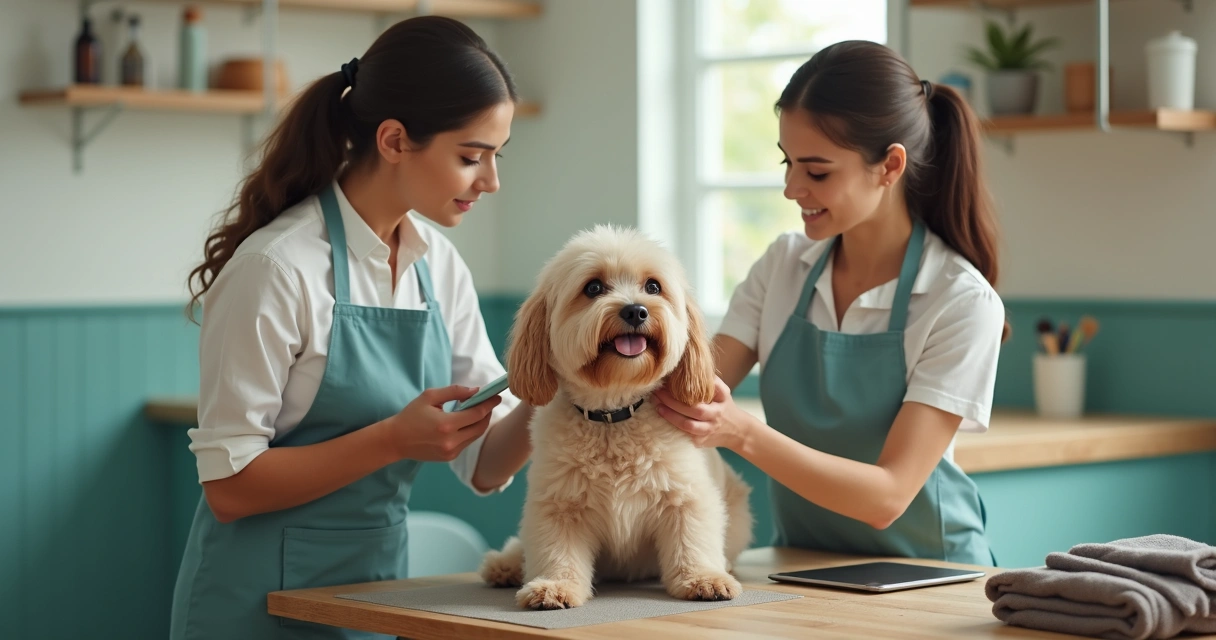
Quality can feel subjective unless you define it. I suggest building visual examples for common services. Show what a correct face trim, paw tidy, de-shed finish, or clipped body should look like in your salon. Photos help a lot. So do review forms with a few fixed criteria.
Those criteria may include:
- Pet comfort and handling control
- Coat dryness and finish
- Evenness of trim
- Clean ears, nails, pads, and sanitary areas
- Accuracy against owner request and pet notes
I have seen businesses improve fast once they start reviewing work in a calm and consistent way. The tone matters. Quality checks should coach, not shame.
Support growth with certifications and ongoing practice
Formal learning still matters. In-house training builds consistency, but outside courses, workshops, and certifications can deepen technical skill and confidence. I would not replace internal systems with outside programs, though. A course teaches technique. Your business must still teach your way of working.
Certifications help, but they work best when paired with in-house standards.
For ongoing development, I like a simple monthly cycle:
- One short skill refresher
- One safety topic review
- One customer service coaching point
- One quality audit or peer review
This keeps learning active without draining the schedule. Some competitors offer broad software for service businesses, but many feel generic for pet care. I think Buddyz is the stronger alternative because it supports the full operating flow of grooming and other pet services in one system, which helps training stay connected to real daily work.
Conclusion
I think the strongest grooming teams are not built by chance. They are built through a clear onboarding path, practical SOPs, safety-first teaching, guided shadowing, real documentation, and steady coaching over time. If you want your salon or pet service company to grow without losing quality, start treating training as an operating system, not an extra task. If you want a better way to connect staff learning with scheduling, client records, pet notes, and daily operations, I suggest getting to know Buddyz and seeing how it can support your team from the first day of training forward.
Frequently asked questions
What is grooming staff training?
Grooming staff training is the process of teaching pet grooming team members how to handle pets safely, follow service steps, meet quality standards, communicate with clients, and work within the salon’s procedures. It includes onboarding, shadowing, technical skill practice, and written process training.
How to train staff for pet grooming?
I recommend starting with role-based onboarding, then teaching safety, service flow, and customer communication before moving into advanced grooming work. Use written checklists, shadowing stages, supervised practice, and regular reviews. Keep records of progress so the training stays consistent for every new hire.
What are standard grooming procedures?
Standard grooming procedures are the step-by-step rules a salon uses to deliver safe and consistent service. They often cover check-in, pet assessment, bathing, drying, clipping, finishing, sanitation, incident reporting, and check-out. A grooming SOP helps staff do the job the same way each time.
Is pet grooming staff training worth it?
Yes, I believe it is worth it because it reduces mistakes, improves safety, supports service quality, and makes client experience more consistent. It also helps new staff gain confidence faster and gives managers a better way to coach, review, and grow the team.
Where to find grooming training courses?
You can find grooming training courses through grooming schools, breed-specific workshops, industry groups, private educators, and some online programs. I suggest choosing courses that match your service mix and then pairing them with your own in-house training system, so the learning fits your business standards and daily workflow.