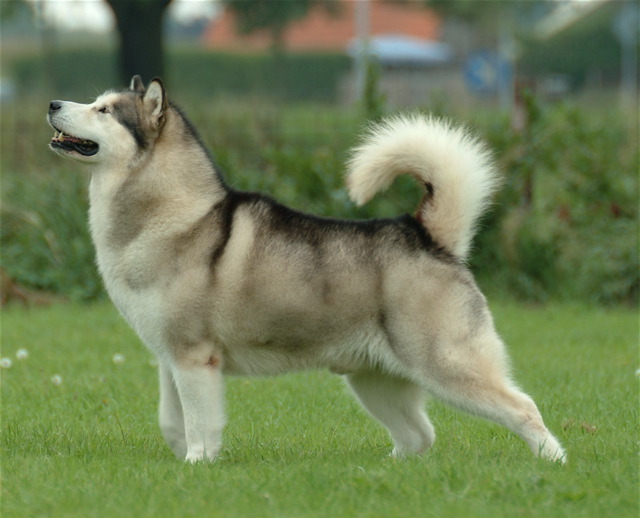
Alaskan Malamute
Also known as Alaskan Malamute, Malamute
The Alaskan Malamute is a friendly, strong-willed working breed whose double coat needs 2–4 times per week; daily during shedding season and professional grooming every 6–12 weeks.
Overview
The Alaskan Malamute is a large-sized Working Group breed with a distinctive coat and strong working heritage. The Alaskan Malamute was developed by the Mahlemut people of Alaska to haul heavy loads in Arctic conditions. It is a powerful, endurance-built sled dog with a harsh double coat. Professional grooming focuses on bath & brush-out with deshedding to keep the coat clean, comfortable, and appropriate for the breed. Consultation should match the finish to the owner's lifestyle, maintenance ability, and any book-recommended natural outline.
History & Origins
One of the oldest Arctic sled dogs, developed by the native Mahlemut Inuit tribe of northwestern Alaska. Essential for survival, used for hauling heavy freight across Arctic terrain, hunting large predators like seals and polar bears
Characteristics & Traits
Breed Traits
Physical Traits
Drooling level
Shedding level
Coat grooming frequency
Social & Family
Playfulness level
Adaptability level
Openness to strangers
Watchdog protective nature
Good with other dogs
Good with young children
Affectionate with family
Personality
Energy level
Barking level
Trainability level
Mental stimulation needs
Exercise & Training
Aim for around 90–120 minutes of total activity per day. Malamutes were bred to haul heavy freight for hours and need serious daily work: long hikes, backpacking, pulling sports, or jogging in cool weather. Heat is dangerous for this arctic breed — in warm months exercise only in the early morning or evening.
Daily Walks by Living Situation
Apartment or Home Without a Backyard
3 walks / day
~40 min each
Apartment life is a poor natural fit but possible for very active owners: three long walks daily plus weekend hikes or dog-powered sports. An under-exercised Malamute is loudly and destructively unhappy.
Home With a Backyard
2 walks / day
~45 min each
A yard helps but will not tire a Malamute on its own — and it must be escape-proof. Malamutes dig under and climb over fences; bury wire at the base and use fencing at least 6 feet tall.
Daycare or Park Time?
Some Malamutes enjoy daycare, but the breed can be pushy with unfamiliar dogs and same-sex scuffles are common, so careful temperament screening matters. A better energy outlet is long hikes, weight-pulling, or carting. If daycare works for your dog, one or two days per week adds useful socialization.
For Pet Parents
The Alaskan Malamute is a friendly, strong-willed working breed whose double coat needs 2–4 times per week; daily during shedding season and professional grooming every 6–12 weeks.
Grooming Commitment
Working breed coat care is ongoing — not just seasonal.
The Alaskan Malamute needs consistent coat care — 2–4 times per week; daily during shedding season keeps the dog comfortable between professional appointments.
- The Alaskan Malamute needs regular grooming even when the coat looks manageable.
- Seasonal shedding is normal for many working breeds — increased brushing helps.
- Professional grooming every 6–12 weeks supports comfort and coat health.
- Discuss trim preferences with your groomer before the appointment.
At-Home Basics
- Difficulty
- moderate
- Shedding
- Heavy Seasonal
- Brushing
- 2–4 times per week; daily during shedding season
- Pro Grooming?
- Yes
- Pro Frequency
- Every 6–12 weeks
Caring for Your Alaskan Malamute at Home
Brushing
Brush in sections through friction areas.
Drying after swimming
Dry the coat and ears thoroughly after bathing or swimming.
Feet & toe checks
Check feet and toes for debris.
Professional grooming schedule
Schedule professional grooming before matting becomes severe.
Nail trimming
Trim nails between appointments when needed.
Ownership Profile
- First-time Owner
- Good with commitment
- Alone Time Tolerance
- Low to moderate
- Handling Sensitivity
- Moderate
- Apartment Friendly
- No
- City Friendly
- No
Best Suited For
- Owners committed to regular coat maintenance
- Homes that can provide appropriate exercise and space
- Families who understand working breed temperament
- Owners comfortable with professional grooming schedules
May Not Suit
- Sedentary households seeking a low-activity dog
- Owners who want minimal brushing between appointments
- First-time owners unprepared for size or guarding instincts
- Homes unable to manage seasonal shedding or specialized coat care
Mistakes to Avoid
- Brushing only the outer coat without removing compacted undercoat.
- Shaving a natural double coat without owner understanding of regrowth and texture changes.
When to Call in a Professional
Leave full grooming — bathing, complete drying, deshedding, and any trimming — to a professional groomer every 6–12 weeks. It keeps the coat healthy and comfortable between visits.
History
The Alaskan Malamute was developed by the Mahlemut people of Alaska to haul heavy loads in Arctic conditions. It is a powerful, endurance-built sled dog with a harsh double coat. One of the oldest Arctic sled breeds, bred for strength rather than speed. Modern grooming for the Alaskan Malamute preserves coat health and a natural outline suited to companion life. Professional groomers should understand both breed-standard presentation and practical pet maintenance options.
Temperament
Friendly, Strong-willed, Affectionate with family, Pack-oriented with the instincts of a working breed.
Alaskan Malamute Coat
The Alaskan Malamute has a rough double coat described in grooming references as bath & brush-out with deshedding.
Color: The undercoat color is always white. The guard hair can be varying shades of black, red, tan or sable. One of these colors shines through the undercoat and accentuates key points on the dog. ~S
Feathering, cords, pattern lines, or smooth short coat maintenance depends on the individual dog and owner preference.
Complete drying and thorough brushing are essential before evaluating the final finish.
- Type
- Rough
- Family
- Double coat
- Structure
- Double
- Density
- Moderate to high
- Undercoat
- Yes
- Shedding
- Heavy seasonal
- Seasonal Change
- Yes
- Matting Risk
- Moderate
- Drying Difficulty
- Moderate
- Water Retention
- Moderate
- Growth Pattern
- Seasonal and continuous
- Breakage Risk
- Low to moderate
Common Problem Areas
Groomer's Guide
Technical reference for professional groomers — specifications and standard operating procedures intended for certified groomers.
Goal: Maintain a fresh, clean, healthy coat
Tools Required
- Slicker brush
- Greyhound comb
- Rubber curry
- Deshedding tool
- Professional clippers
- Thinning shears
- Small detailing shears
- High-velocity dryer
- Nail clippers or grinder
- Ear cleaning solution
- Cotton balls
Pre-Bath Prep
- Trim or grind nails every four to six weeks.
- Clean ears with a mild ear-cleaning solution and document any odor, redness, or discharge.
- Use a rubber curry or deshedding tool on dry coat when undercoat is heavy.
- Line brush in sections to locate tangles before the bath.
- Confirm whether whisker removal is requested.
Before Grooming
- Coat density and texture
- Undercoat compaction or cord condition
- Matting in friction areas
- Skin and ear condition
- Nail length and foot coat
- Owner preference for natural vs trimmed finish
- Recent outdoor activity or swimming
Consultation Notes
- Confirm whether the owner wants a natural finish or shorter maintenance trim.
- Discuss home brushing frequency and seasonal shedding expectations.
- Ask about whisker removal preference.
- Set expectations for service time based on coat condition.
- Refer persistent skin or ear concerns to a veterinarian.
Preparation Objectives
- Remove loose coat before bathing when possible
- Identify mats, cords, or compacted undercoat
- Confirm trim style with the owner
- Protect skin and maintain natural outline
Recommended Actions
- Trim or grind nails every four to six weeks.
- Clean ears with a mild ear-cleaning solution and document any odor, redness, or discharge.
- Use a rubber curry or deshedding tool on dry coat when undercoat is heavy.
- Line brush in sections to locate tangles before the bath.
- Confirm whether whisker removal is requested.
Preparation Warnings
- Do not assume surface brushing has cleared compacted undercoat.
- Do not promise a long natural finish if matting is severe close to the skin.
- Refer persistent ear or skin concerns to a veterinarian.
Objectives
- Clean the coat thoroughly
- Remove odor and debris
- Prepare the coat for complete drying and finishing
Process
- Fully saturate the coat to the skin.
- Use shampoo appropriate for skin and coat condition.
- Rinse thoroughly, especially in dense or feathered areas.
- Apply conditioner when the coat feels dry or tangled.
- Remove excess water without rubbing coat into mats.
Product Guidance
- Choose products based on skin sensitivity and coat dryness, not coat color alone.
- Insufficient rinsing can leave residue that irritates skin under dense coat.
- Light conditioning can make combing easier after drying.
Breed Specifics
- Pay extra attention to dense neck, chest, and rear coat during bathing.
- Complete rinsing prevents residue under dense coat.
Drying Objectives
- Dry the coat completely to the skin
- Remove loosened undercoat
- Separate coat for finishing
- Prevent ear moisture retention
Drying Methods
- High-velocity drying in sections
- Line brushing during drying
- Comb check after the coat is fully dry
Drying — Breed Specifics
- Pay extra attention to ears, chest, armpits, and rear coat.
- Do not begin trimming until the coat is completely dry and cool to the skin.
- A powerful high-velocity dryer reduces manual deshedding effort during coat blow.
Drying Quality Standard
The coat should be fully dry, loose undercoat removed when applicable, and combable before detail work begins.
Techniques
- Bath & brush-out with deshedding
- Deshedding
- Light trimming
- Nail and pad care
Common Trims
- Natural Maintenance Finish
- Seasonal Deshed Service
Clipper Areas
- Sanitary trimming
- Pad trimming
- Pattern body trim when requested
- Light ear or muzzle neatening
Scissor Areas
- Feet
- Hocks
- Ear edges
- Tail
- Pattern blending
Scissoring — Primary Areas
- Feet
- Hocks
- Ear edges
- Tail
- Pattern blending
Scissoring — Finish Goals
- Neat natural outline
- No visible scissor lines
- Compact feet
- Clean but not over-sculpted appearance
Scissoring — Breed Specifics
- Thinning shears often work better than straight shears for a natural finish.
- Trim pads with a #10 blade and back-brush between the toes when needed.
- Edge ears lightly with thinning shears for a natural look.
Clipper Work — Common Uses
- Sanitary trimming
- Pad trimming
- Pattern body trim when requested
- Light ear or muzzle neatening
Clipper Safety Notes
- Use a #10 blade for pad trimming regardless of other blade choices.
- Confirm blade temperature and skin condition throughout the service.
- Do not over-clip natural double coats unless the owner clearly requests a shorter pet trim.
Equipment
- #10 blade for pads
- Thinning shears for natural blending
- #7F or guard combs for pattern trims when applicable
Blade & Length Selection
- Owner preference for natural vs clipped finish
- Coat density and texture
- Skin sensitivity
- Whether pattern lines are requested
Common Pet Trim Styles
- Natural Maintenance Finish — A bath & brush-out with deshedding that preserves the breed's natural outline with neat feet, ears, and sanitary areas.
- Seasonal Deshed Service — Focused deshedding during coat blow with bath, dry, and light neatening.
Style Selection Factors
- Seasonal shedding
- Home brushing frequency
- Owner preference for natural vs short coat
- Activity level and outdoor exposure
Head
Maintain breed-appropriate expression Remove flyaway hairs
Over-clipping and losing breed character
Ears
Inspect and dry ears after bathing. Edge lightly with thinning shears when needed. Check behind the ears for hidden matting.
Do not diagnose or treat suspected ear infection. Refer odor, discharge, redness, swelling, or pain to a veterinarian.
Feet
Trim pads with a #10 blade using a light touch. Back-brush hair between the toes when needed. Neaten the foot outline with thinning or detailing shears. Trim nails short or grind for healthy foot structure.
Moisture and debris between toes Over-trimming pads and causing irritation
Tail
Preserve breed-appropriate tail carriage and feathering
Sanitary Area
Remove only the coat needed for hygiene Blend naturally into surrounding coat Avoid unnecessary close clipping
ears
highMaintenance
- -Inspect and dry ears after bathing.
- -Edge lightly with thinning shears when needed.
- -Check behind the ears for hidden matting.
Styles
- -Natural
- -Lightly edged with thinning shears
Risks & Warnings
- -Do not diagnose or treat suspected ear infection.
- -Refer odor, discharge, redness, swelling, or pain to a veterinarian.
feet
highMaintenance
- -Trim pads with a #10 blade using a light touch.
- -Back-brush hair between the toes when needed.
- -Neaten the foot outline with thinning or detailing shears.
- -Trim nails short or grind for healthy foot structure.
Styles
- -Natural neat feet
- -Rounded or column feet when pattern trim requested
Risks & Warnings
- -Moisture and debris between toes
- -Over-trimming pads and causing irritation
head
moderateGoals
- -Maintain breed-appropriate expression
- -Remove flyaway hairs
Styles
- -Natural
- -Light neatening
Risks & Warnings
- -Over-clipping and losing breed character
tail
moderateGoals
- -Preserve breed-appropriate tail carriage and feathering
Styles
- -Natural
- -Light shaping
sanitary Area
moderateGoals
- -Remove only the coat needed for hygiene
- -Blend naturally into surrounding coat
- -Avoid unnecessary close clipping
High-Risk Areas
- Behind the ears
- Chest
- Armpits
- Rear feathering
- Tail
- Between the toes
Challenges
- Seasonal coat blow and compacted undercoat
- Owner requests for full shave when deshedding is more appropriate
- Incomplete drying in dense coat
- Matting in friction areas
- Beginning detail work while coat is still damp.
- Using blades other than #10 for pad trimming.
Management Principles
- Deshed before focusing on cosmetic trimming.
- Dry completely before evaluating the final outline.
- Use thinning shears for natural edges.
- Discuss maintenance expectations during consultation.
Pro Tips
- Use a high-velocity dryer before and after bathing to loosen undercoat.
- Line brush and comb to the skin before calling the groom complete.
- Trim pads with a #10 blade and back-brush between the toes when needed.
- Use thinning shears for natural edges on ears, feet, and feathering.
- Ask about seasonal shedding and home brushing routines during check-in.
- Do not shave a double coat without clear owner consent and education.
Assessment Priority
Keep the coat clean, dry, and breed-appropriate
Frequently Asked Questions
Ready to book your Alaskan Malamute's grooming session?
Connect with a Buddyz professional to schedule online in minutes.
Not the right match?
Continue exploring our directory to find the perfect breed for your lifestyle.
Are you a professional?
Use Buddyz to manage your salon, understand complex coats, and educate pet parents.