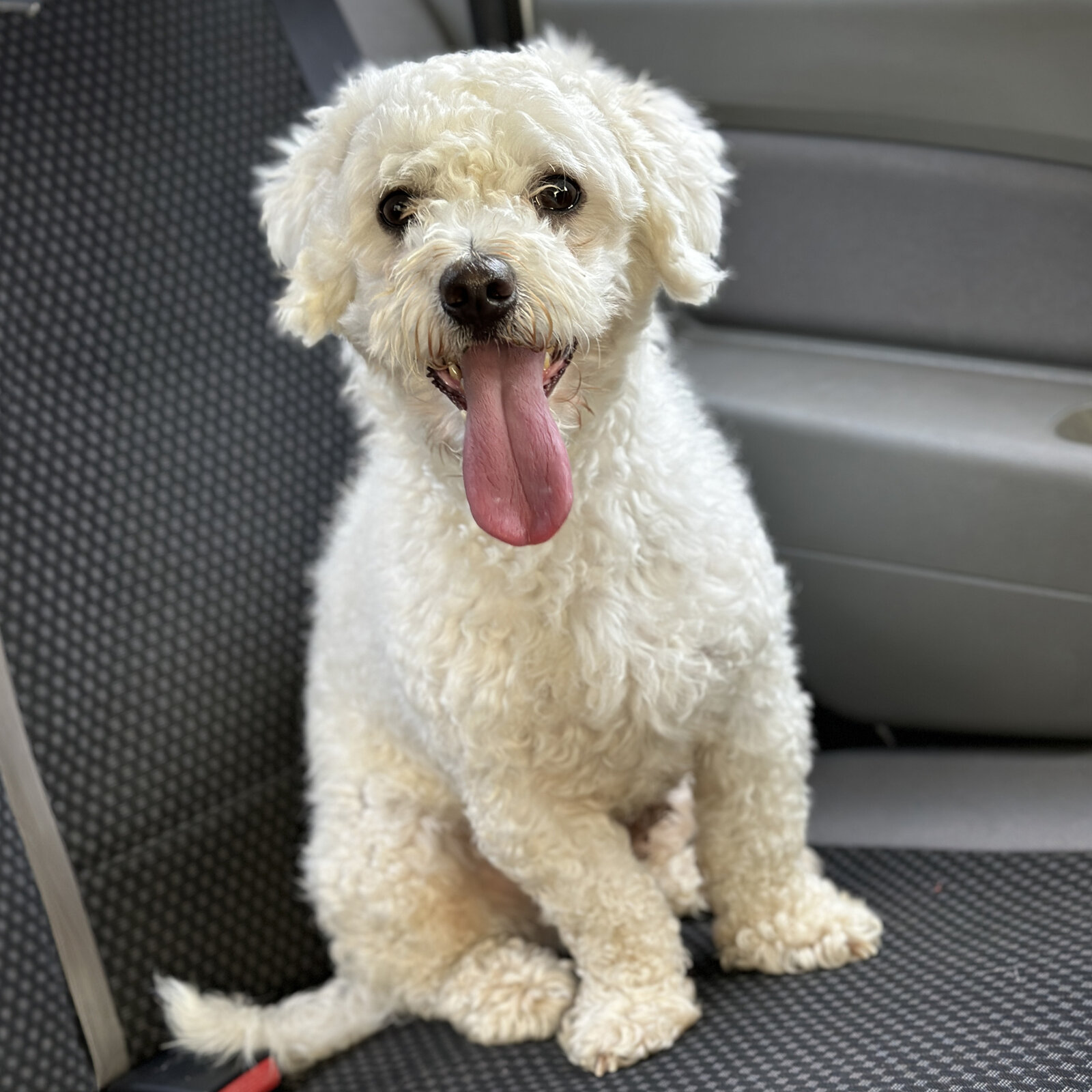
Bichon Frise
Also known as Bichon Frise, Bichon à poil frisé
The Bichon Frise is a cheerful, affectionate companion whose continuously growing curly coat requires frequent brushing, precision scissoring, and professional grooming every four to six weeks.
Overview
The Bichon Frise is a small, cheerful companion dog known for its soft, rounded silhouette and powder-puff coat. Everything about the breed's appearance is intentionally soft and balanced. The coat is curly, dense, and continuously growing. It sheds very little, but matting risk is high without consistent brushing and professional grooming. Professional grooming is essential to maintain the breed's characteristic outline. The Bichon is not a low-maintenance breed despite its small size and low visible shedding. Grooming requires scissor precision, invisible blending, and careful attention to head proportion. The rounded head style depends on correct neck and ear balance.
History & Origins
Descended from the Barbet, a Mediterranean water spaniel. The breed was developed in France and became a popular companion dog for European nobility. The modern breed standard was established in France after World War I.
Characteristics & Traits
Breed Traits
Physical Traits
Drooling level
Shedding level
Coat grooming frequency
Social & Family
Playfulness level
Adaptability level
Openness to strangers
Watchdog protective nature
Good with other dogs
Good with young children
Affectionate with family
Personality
Energy level
Barking level
Trainability level
Mental stimulation needs
For Pet Parents
The Bichon Frise is a cheerful, affectionate companion whose continuously growing curly coat requires frequent brushing, precision scissoring, and professional grooming every four to six weeks.
Grooming Commitment
Low shedding does not mean low maintenance.
A low-shedding coat is not a low-maintenance coat. The Bichon Frise requires consistent brushing and professional grooming throughout its life.
- Bichons need regular grooming even though they shed very little.
- Brushing must reach the skin to prevent hidden matting.
- A shorter trim may be recommended when the coat is severely tangled.
- The rounded head style requires professional maintenance every four to six weeks.
- Frequent grooming helps make handling more familiar and comfortable.
At-Home Basics
- Difficulty
- very_high
- Shedding
- Very low
- Brushing
- Daily or near-daily for longer styles
- Pro Grooming?
- Yes
- Pro Frequency
- Every 4–6 weeks
Caring for Your Bichon Frise at Home
Brushing
Line-brush in sections from skin to tip.
Brushing
Follow brushing with a metal comb to the skin.
Chest & thigh brushing
Check behind the ears, armpits, inner thighs, undercarriage, and tail base.
Avoid bathing a matted coat at home
Avoid bathing a matted coat at home.
Professional grooming schedule
Maintain professional appointments every four to six weeks.
Nail trimming
Trim nails before they affect foot structure.
Ownership Profile
- First-time Owner
- Good with commitment
- Alone Time Tolerance
- Low to moderate
- Handling Sensitivity
- Moderate
- Apartment Friendly
- Yes
- City Friendly
- Yes
Best Suited For
- Owners prepared for frequent coat maintenance
- Apartment and family households
- People seeking an affectionate companion
- Owners who enjoy stylized grooming presentations
- Households able to provide regular companionship
May Not Suit
- Owners seeking a low-maintenance coat
- Homes unable to maintain a regular grooming schedule
- Owners who dislike frequent brushing
- Households expecting minimal professional grooming costs
Mistakes to Avoid
- Brushing only the outer coat without combing to the skin.
- Trimming the neck too short, causing the head to appear oversized and unbalanced.
- Leaving visible demarcation between body, shoulder, and leg furnishings.
- Failing to trim ear leather to nose length before shaping the muzzle and jaw.
- Attempting to preserve length through prolonged or painful dematting.
When to Call in a Professional
Leave full grooming — bathing, complete drying, deshedding, and any trimming — to a professional groomer every 4–6 weeks. It keeps the coat healthy and comfortable between visits.
History
The Bichon Frise belongs to the Barbichon family of small companion dogs that developed around the Mediterranean. The breed became especially popular in France, where it was refined as a companion and performer. Its powder-puff appearance and cheerful temperament made it well suited to companion living rather than field work. Modern Bichon grooming emphasizes a rounded, continuous outline with no visible breaks in the coat.
Temperament
Cheerful, affectionate, playful, alert, and people-oriented.
Bichon Frise Coat
The Bichon Frise has a soft, dense, curly coat with a plush undercoat and a curly outer coat that grows continuously.
Loose hairs tend to remain caught within the surrounding curls, contributing to low visible shedding but high matting risk.
Friction areas, moisture, and incomplete brushing commonly lead to tangles close to the skin.
The breed is typically maintained in a powder-puff trim with a rounded head, continuous neck crest, and column-shaped legs.
- Type
- Curly
- Family
- Curly coat
- Structure
- Double
- Density
- High
- Undercoat
- Yes
- Shedding
- Very low
- Seasonal Change
- Minimal
- Matting Risk
- Very high
- Drying Difficulty
- Moderate to high
- Water Retention
- High
- Growth Pattern
- Continuous
- Breakage Risk
- Moderate
Common Problem Areas
Groomer's Guide
Technical reference for professional groomers — specifications and standard operating procedures intended for certified groomers.
Goal: Maintain a uniform powder-puff outline
Tools Required
- Slicker brush
- Greyhound comb
- Professional clippers
- Detachable blades
- Guard comb attachments
- Straight shears
- Curved shears (8.5–10 inch)
- Small detailing shears
- Thinning shears
- High-velocity dryer
- Nail clippers or grinder
- Ear cleaning solution
- Cotton balls
- Hemostat
Pre-Bath Prep
- Complete a hands-on coat assessment.
- Check the coat with a metal comb to the skin.
- Trim or grind nails every four to six weeks.
- Clean ears and pluck excessive canal hair only when appropriate and with client consent.
- Remove severe mats before bathing when they cannot be safely worked out wet.
- If the dog has gone more than six weeks without grooming, set the body pattern before bathing.
- Confirm desired head, body, leg, and foot style.
Before Grooming
- Overall coat length and density
- Matting severity and location
- Skin condition
- Previous scissor or clipper work
- Ear and eye-area cleanliness
- Nail length
- Dog's comfort with handling
- Requested trim style and length
- Owner's home-maintenance routine
- Time since last professional grooming
Consultation Notes
- Confirm preferred body and leg length.
- Discuss whether a shorter pet trim is more realistic for the current coat condition.
- Explain that severe matting may require resetting the pattern before bathing.
- Review whether whisker removal is desired.
- Set expectations for head proportion based on neck coat length.
Preparation Objectives
- Identify matting before the bath
- Establish a realistic trim plan
- Protect skin and comfort
- Prepare the coat for effective cleansing and drying
Recommended Actions
- Complete a hands-on coat assessment.
- Check the coat with a metal comb to the skin.
- Trim or grind nails every four to six weeks.
- Clean ears and pluck excessive canal hair only when appropriate and with client consent.
- Remove severe mats before bathing when they cannot be safely worked out wet.
- If the dog has gone more than six weeks without grooming, set the body pattern before bathing.
- Confirm desired head, body, leg, and foot style.
Preparation Warnings
- Do not assume the coat is mat-free based only on surface brushing.
- Do not promise a long stylized finish before assessing coat condition to the skin.
- Avoid excessive dematting that may cause pain or coat damage.
Objectives
- Remove oil, debris, and product buildup
- Clean the coat thoroughly without leaving residue
- Prepare the coat for complete drying and scissoring
Process
- Follow curly and wavy coat bathing protocols.
- Wet the coat thoroughly to the skin.
- Apply an appropriate shampoo and rinse completely.
- Repeat shampooing when necessary.
- Apply conditioner according to coat condition.
- Rinse until the coat feels clean and free of residue.
- Remove excess water without rubbing the coat into tangles.
Product Guidance
- Choose products according to skin and coat condition.
- Heavy products may reduce volume and affect scissor finishing.
- Insufficient rinsing may contribute to irritation and poor coat texture.
Breed Specifics
- Use high-velocity drying to straighten curl before scissoring.
- Pay close attention to dense areas behind the ears and under the collar.
- Maintain comfortable water temperature throughout the service.
- Support the dog securely on wet surfaces.
Drying Objectives
- Dry the coat completely
- Separate and straighten the curls
- Locate remaining tangles
- Prepare an even surface for scissoring or clipper work
Drying Methods
- Controlled high-velocity drying before and after the bath
- Line brushing during drying
- Comb checking after drying
Drying — Breed Specifics
- Coat must be fully dry and brushed out before any trim work begins.
- Blow out loose coat, tangles, and debris before setting the pattern.
- Use controlled airflow around the face and ears.
Drying Quality Standard
The coat should be fully dry, separated, straightened, and combable to the skin before finish work begins.
Techniques
- Bath and brush
- Fluff drying
- Hand scissoring
- Guard-comb trimming
- Clipper trimming
- Pad and foot detailing
Common Trims
- Powder-Puff Trim
- Short Pet Trim
- Guard Comb Trim
Clipper Areas
- Body pattern setting with guard combs
- Throat clipping
- Pad trimming
- Sanitary trimming
- Short practical pet trims
Scissor Areas
- Top of head
- Ears
- Muzzle and jawline
- Crest and neck
- Body contour
- Front and rear legs
- Feet
- Tail
- Transition blending
Scissoring — Primary Areas
- Top of head
- Ears
- Muzzle and jawline
- Crest and neck
- Body contour
- Front and rear legs
- Feet
- Tail
- Transition blending
Scissoring — Finish Goals
- Uniform powder-puff outline
- No visible breaks in the coat
- Balanced rounded head
- Straight parallel leg columns
- Rounded feet
- Velvety, even coat texture
Scissoring — Breed Specifics
- Standard pattern length is approximately one inch over the body, adjusted for conformation.
- The crest must remain longer than the body to support head proportion.
- Ear length trimmed to the nose tip sets the entire head balance.
- Jawline coat should equal ear length.
- Bevel coat above the eyes shorter over the lids, longer toward the skull.
- Do not trim beyond the outside corners of the eyes.
- Leg furnishings range from one to two inches depending on bone and coat density.
Clipper Work — Common Uses
- Body pattern setting with guard combs
- Throat clipping
- Pad trimming
- Sanitary trimming
- Short practical pet trims
Clipper Safety Notes
- Confirm blade temperature frequently.
- Use extra care around loose skin, lips, eyelids, toes, and sanitary areas.
- When clipping pads, brush leg coat over the pad edge and trim simultaneously for a seamless blend.
- Coat condition and safety take priority over the requested length.
Equipment
- #10 blade for pads
- #7F blade
- #5F blade
- #4F blade
- #2 guard comb
- #1.5 guard comb
- #1 guard comb
- #15 blade for throat when appropriate
Blade & Length Selection
- Coat condition
- Desired finished length
- Skin sensitivity
- Owner maintenance ability
- Previous grooming history
Common Pet Trim Styles
- Powder-Puff Trim — The breed-standard stylized trim with approximately one inch of coat over the body, a rounded head, fuller crest and neck, and column-shaped legs.
- Short Pet Trim — A shorter body and leg finish using the same basic pattern lines for easier home maintenance.
- Guard Comb Trim — Body set with a guard comb followed by hand scissoring for legs, head, and blending.
Style Selection Factors
- Coat condition
- Owner preference
- Home brushing ability
- Dog's comfort with grooming
- Lifestyle
- Desired professional schedule
Head
Create a soft, domed, balanced head Maintain deep-set eye appearance Blend ears seamlessly into the topknot with no breaks Keep eyes and nose as the focal triangle of the face
Over-trimming the neck, making the head appear oversized Broken lines over the ears or at the occiput Trimming beyond the outside corners of the eyes Double-chin effect if throat V is not addressed
Ears
Measure ear length against the nose tip. Check behind the ears for hidden mats. Blend ear tops seamlessly into the head. Inspect the ear opening during pre-work.
Do not diagnose or treat suspected infection. Refer persistent odor, discharge, redness, swelling, or pain to a veterinarian.
Feet
Trim pads with a #10 blade using a light touch. Box the foot while standing, then round the corners. Use small detailing shears when the foot is lifted. Trim nails every four to six weeks.
Small toes are easily nicked during foot rounding. Overgrown nails affect posture and foot shape. Pad clipping without blending leg coat creates visible breaks.
Tail
Leave the tail in a natural, full state unless owner requests otherwise Blend the tail base invisibly into the body Prevent matting at the tail base
Sanitary Area
Maintain hygiene under the tail and in the groin when needed Remove only enough coat to accomplish the goal Keep the area looking natural
ears
very_highMaintenance
- -Measure ear length against the nose tip.
- -Check behind the ears for hidden mats.
- -Blend ear tops seamlessly into the head.
- -Inspect the ear opening during pre-work.
Styles
- -Ear leather trimmed to nose length
- -Softly beveled ear edges
- -Continuous blend into topknot
Risks & Warnings
- -Do not diagnose or treat suspected infection.
- -Refer persistent odor, discharge, redness, swelling, or pain to a veterinarian.
feet
highMaintenance
- -Trim pads with a #10 blade using a light touch.
- -Box the foot while standing, then round the corners.
- -Use small detailing shears when the foot is lifted.
- -Trim nails every four to six weeks.
Styles
- -Rounded compact feet
- -Beveled feet blending into leg furnishings
Risks & Warnings
- -Small toes are easily nicked during foot rounding.
- -Overgrown nails affect posture and foot shape.
- -Pad clipping without blending leg coat creates visible breaks.
head
very_highGoals
- -Create a soft, domed, balanced head
- -Maintain deep-set eye appearance
- -Blend ears seamlessly into the topknot with no breaks
- -Keep eyes and nose as the focal triangle of the face
Styles
- -Rounded powder-puff head
- -Shorter pet head proportioned to body length
- -Domed skull with continuous ear blend
Risks & Warnings
- -Over-trimming the neck, making the head appear oversized
- -Broken lines over the ears or at the occiput
- -Trimming beyond the outside corners of the eyes
- -Double-chin effect if throat V is not addressed
tail
mediumGoals
- -Leave the tail in a natural, full state unless owner requests otherwise
- -Blend the tail base invisibly into the body
- -Prevent matting at the tail base
Styles
- -Natural full plume
- -Blended tail base into body
sanitary Area
highGoals
- -Maintain hygiene under the tail and in the groin when needed
- -Remove only enough coat to accomplish the goal
- -Keep the area looking natural
High-Risk Areas
- Behind the ears
- Armpits
- Neck and collar area
- Inner thighs
- Undercarriage
- Tail base
- Between the toes
Challenges
- Tight matting close to the skin
- Broken transition lines between body and legs
- Over-trimmed neck affecting head balance
- Uneven leg columns
- Clipper tracks on body coat
- Incomplete drying before scissoring
- Owner requests for long styles on severely matted coats
- Creating visible breaks or part lines between the ears and the topknot.
- Beginning scissor work while moisture remains in the coat.
Management Principles
- Set expectations during consultation.
- Use ears as the primary head reference point.
- Maintain a fuller neck crest for correct proportion.
- Check all transitions for invisible blending.
- Prioritize comfort and coat health over length preservation.
Pro Tips
- Use a metal comb after brushing to confirm the coat is clear to the skin.
- Trim ear leather to nose length before shaping the muzzle and jaw.
- Leave the neck crest longer than the body coat to support head balance.
- Bevel coat above the eyes: shorter over the lids, longer toward the skull.
- Work legs into straight parallel columns when viewed from front or rear.
- Feather off shoulder and hip transitions invisibly.
- Dry completely before judging coat length or balance.
- Step back regularly to evaluate the full powder-puff silhouette.
- Match the haircut to the owner's realistic maintenance routine.
- Never compromise safety to preserve length.
Assessment Priority
Prevent matting while maintaining a continuous powder-puff outline with balanced head proportion
Ready to book your Bichon Frise's grooming session?
Connect with a Buddyz professional to schedule online in minutes.
Not the right match?
Continue exploring our directory to find the perfect breed for your lifestyle.
Are you a professional?
Use Buddyz to manage your salon, understand complex coats, and educate pet parents.