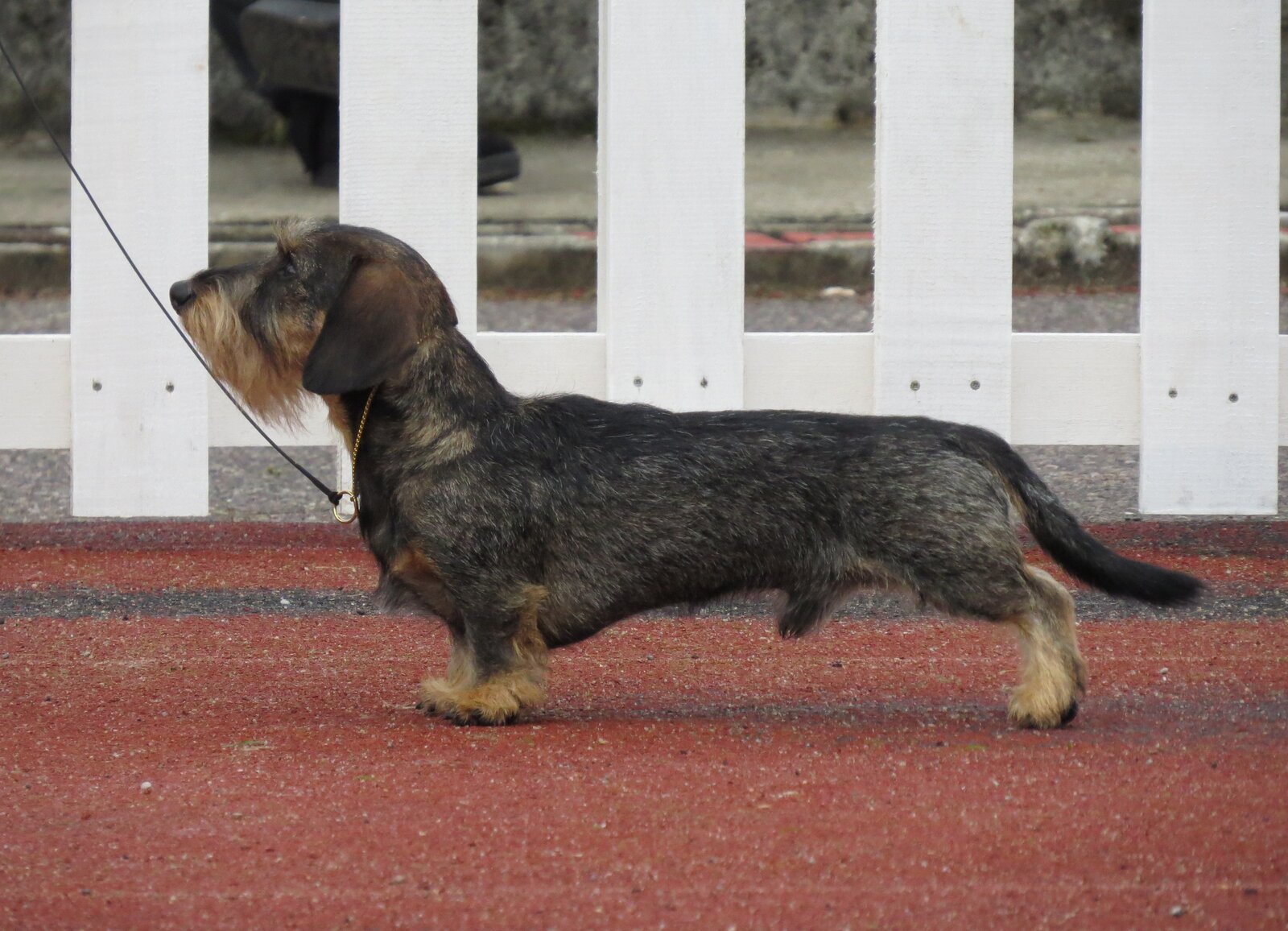
Dachshund
Also known as Dachshund, Doxie, Wiener Dog
The Dachshund is a bold small hound with smooth, long, or wire coats — each needing a different grooming approach from bath-and-curry to line brushing or hand stripping.
Overview
The Dachshund is a small scent hound recognized in smooth, long-haired, and wire-haired coat varieties. Each variety has different grooming needs — from simple bath-and-curry maintenance on smooth coats to line brushing on long coats and hand stripping on wire coats. All varieties share a long back that requires careful handling on the grooming table. Professional grooming keeps the coat healthy while respecting breed character for each coat type.
History & Origins
Developed in Germany over 300 years ago (records date to 15th century) specifically for hunting badgers in their burrows. The name 'Dachshund' translates to 'badger dog' in German. Wirehaired varieties were developed by crossing with terriers for work in thorny terrain, while longhaired varieties were created using spaniels for colder climates.
Characteristics & Traits
Breed Traits
Physical Traits
Drooling level
Shedding level
Coat grooming frequency
Social & Family
Playfulness level
Adaptability level
Openness to strangers
Watchdog protective nature
Good with other dogs
Good with young children
Affectionate with family
Personality
Energy level
Barking level
Trainability level
Mental stimulation needs
For Pet Parents
The Dachshund is a bold small hound with smooth, long, or wire coats — each needing a different grooming approach from bath-and-curry to line brushing or hand stripping.
Grooming Commitment
Three coat types means three different maintenance plans.
Dachshund grooming is not one-size-fits-all — smooth, long, and wire coats need different routines.
- Know which coat variety you have — grooming differs.
- Protect the long back from jumps and obesity.
- Wire coats lose texture if clipped instead of stripped.
- Long coats mat in feathering without regular combing.
- Always use a #10 blade for pad trimming in professional care.
At-Home Basics
- Difficulty
- moderate
- Shedding
- Moderate
- Brushing
- Weekly for smooth; 2–4 times per week for long; regular stripping/carding for wire
- Pro Grooming?
- Yes
- Pro Frequency
- Every 4–8 weeks
Caring for Your Dachshund at Home
Match home care to coat variety
Match home care to coat variety.
Protect the back from jumps and stairs
Protect the back from jumps and stairs.
Professional grooming schedule
Schedule professional care before matting or blown coat becomes unmanageable.
Dry feathering thoroughly
Dry feathering thoroughly after bathing at home.
Ownership Profile
- First-time Owner
- Good with commitment
- Alone Time Tolerance
- Moderate
- Handling Sensitivity
- Moderate
- Apartment Friendly
- Yes
- City Friendly
- Yes
Best Suited For
- Owners who understand back safety
- Homes committed to variety-specific coat care
- People who enjoy a bold small hound personality
- Owners willing to manage stairs and jumping
May Not Suit
- Homes where the dog will frequently jump on/off furniture unassisted
- Owners wanting one generic low-maintenance coat plan for all varieties
Mistakes to Avoid
- Lifting or restraining the dog in ways that stress the long back.
When to Call in a Professional
Leave full grooming — bathing, complete drying, deshedding, and any trimming — to a professional groomer every 4–8 weeks. It keeps the coat healthy and comfortable between visits.
History
The Dachshund was bred in Germany to hunt badgers and other burrow-dwelling game. The long body and short legs allowed the dog to work underground. Three coat varieties developed for different terrain and climate. Modern grooming preserves each variety's distinct coat character.
Temperament
Bold, curious, loyal, and often comedic.
Dachshund Coat
The Dachshund is recognized in smooth, long-haired, and wire-haired coat varieties.
Smooth: short coat lying flat — maintained with bath and curry brush.
Long-haired: silky combination coat with feathering — brush out and minor trimming.
Wire-haired: harsh body jacket with distinctive brows and beard — hand stripping preferred.
Common colors include red, black and tan, chocolate, dapple, brindle, and wild boar.
- Type
- Smooth long or wiry
- Family
- Variety dependent
- Structure
- Single or double by variety
- Density
- Moderate
- Undercoat
- Yes
- Shedding
- Moderate
- Seasonal Change
- Yes
- Matting Risk
- Moderate
- Drying Difficulty
- Moderate
- Water Retention
- Moderate
- Growth Pattern
- Variety dependent
- Breakage Risk
- Low to moderate
Common Problem Areas
Groomer's Guide
Technical reference for professional groomers — specifications and standard operating procedures intended for certified groomers.
Goal: Maintain healthy coat by variety
Tools Required
- Rubber curry
- Slicker brush
- Greyhound comb
- Carding tool
- Stripping knives
- Professional clippers
- Small detailing shears
- Curved shears
- Thinning shears
- High-velocity dryer
- Nail clippers or grinder
- Ear cleaning solution
- Cotton balls
Pre-Bath Prep
- Trim or grind nails every four to six weeks.
- Swab ears with mild ear-cleaning solution.
- HV dry and curry on smooth coats; line brush long feathering; card and strip wire coats before bathing when appropriate.
- Confirm whisker removal preference.
Before Grooming
- Coat variety
- Matting in feathering or wire jacket
- Undercoat on long or wire coats
- Owner preference for wire coat stripping vs clipper
- Back comfort and handling sensitivity
- Whisker removal preference
Consultation Notes
- Confirm coat variety and owner expectations.
- For wire coats, discuss hand stripping vs clipper and texture consequences.
- For long coats, check home brushing routine.
- Use back-safe support throughout the service.
Preparation Objectives
- Identify coat variety and plan
- Remove loose coat before bathing when possible
- Protect the back during handling
Recommended Actions
- Trim or grind nails every four to six weeks.
- Swab ears with mild ear-cleaning solution.
- HV dry and curry on smooth coats; line brush long feathering; card and strip wire coats before bathing when appropriate.
- Confirm whisker removal preference.
Preparation Warnings
- Never lift by the mid-back.
- Do not promise wire coat texture after full clipping.
- Refer skin or ear concerns to a veterinarian.
Objectives
- Clean coat thoroughly by variety
- Prepare for drying and finishing
- Maintain skin comfort
Process
- Smooth: short-coat bathing protocol.
- Long: combination coat protocol with thorough rinse in feathering.
- Wire: bathe after carding/stripping when following show or maintenance cycle.
Product Guidance
- Match products to coat variety and skin sensitivity.
- Wire coats may benefit from pre-strip chalk or powder for grip before bathing when stripping.
Breed Specifics
- Use a damp towel on the muzzle after bathing.
- Remove whiskers only if the client requests.
- Long coats: HV dry before and after bath; blow out loose coat, tangles, and dirt.
Drying Objectives
- Dry completely
- Separate feathering on long coats
- Prepare wire coat for finish work
Drying Methods
- High-velocity drying in sections
- Line brushing on long coats
- Hand check on all varieties
Drying — Breed Specifics
- Long: do not trim until fully dry and fluffed.
- Smooth: curry while drying to remove loose coat.
- Wire: dry before detail head work.
Drying Quality Standard
Coat should be fully dry and ready for variety-appropriate finishing.
Techniques
- Bath and curry brush (smooth)
- Line brush and minor trim (long)
- Carding and hand stripping (wire)
- Light foot and hock neatening
Common Trims
- Smooth Bath and Curry
- Long-Haired Brush-Out
- Wire Hand-Strip Finish
Clipper Areas
- Pad trimming on all varieties
- Sanitary trim with #10 on wire coats
- Optional cheek/throat clip on wire heads in pet styling
- Optional smooth-coat foot neatening
Scissor Areas
- Wire eyebrows
- Long coat feathering
- Feet
- Flag tail tip on long coats
Scissoring — Primary Areas
- Wire eyebrows
- Long coat feathering
- Feet
- Flag tail tip on long coats
Scissoring — Finish Goals
- Wire: rectangular beard and divided brows
- Long: mat-free feathering with flag tail
- Smooth: minimal natural neatening
Scissoring — Breed Specifics
- Shape wire brows following the eye socket ridge with curved shears in reverse.
- Long coat tail should narrow to a pointed flag tip.
- Finger pluck fuzzy undercoat from saddled front-leg areas on long coats when present.
Clipper Work — Common Uses
- Pad trimming on all varieties
- Sanitary trim with #10 on wire coats
- Optional cheek/throat clip on wire heads in pet styling
- Optional smooth-coat foot neatening
Clipper Safety Notes
- Trim pads with a #10 blade on all varieties.
- Clipping a wire coat changes texture and color permanently until regrowth.
- Use back-safe positioning at all times.
Equipment
- #10 blade for pads and sanitary areas
- #10 or #15 for wire head pet styling when needed
- Thinning shears for natural feet
Blade & Length Selection
- Coat variety
- Owner preference for wire coat texture
- Skin sensitivity
Common Pet Trim Styles
- Smooth Bath and Curry — Bath, deshed, and light neatening for smooth coats.
- Long-Haired Brush-Out — Bath, line brush, flag tail shaping, and minor trim preserving feathering.
- Wire Hand-Strip Finish — Card and hand strip maintaining harsh body jacket with correct brows and beard.
Style Selection Factors
- Coat variety
- Owner preference for wire texture
- Home brushing ability
- Show vs pet maintenance
Head
Preserve variety-specific head character Keep vision clear
Over-clipping wire coat and losing texture Uneven wire eyebrows
Ears
Long: leave ears long and natural. Wire: strip or clip long ear hair; edge with detailing shears. Inspect and dry after bathing.
Refer ear concerns to a veterinarian.
Feet
Trim pads with a #10 blade. Neaten feet to look natural. Neaten hocks when needed.
Long feathering between toes on long coats
Tail
Long: shape into flag with pointed tip Wire: keep short and harsh
Sanitary Area
Light sanitary clip with #10 on wire coats when needed Minimal hygiene maintenance on smooth and long
ears
moderateMaintenance
- -Long: leave ears long and natural.
- -Wire: strip or clip long ear hair; edge with detailing shears.
- -Inspect and dry after bathing.
Styles
- -Smooth or long natural ears
- -Wire smooth ears with minimal hair
Risks & Warnings
- -Refer ear concerns to a veterinarian.
feet
moderateMaintenance
- -Trim pads with a #10 blade.
- -Neaten feet to look natural.
- -Neaten hocks when needed.
Styles
- -Natural neat feet on all varieties
Risks & Warnings
- -Long feathering between toes on long coats
head
highGoals
- -Preserve variety-specific head character
- -Keep vision clear
Styles
- -Smooth natural head
- -Long smooth skull with natural ears
- -Wire rectangular beard with divided brows
Risks & Warnings
- -Over-clipping wire coat and losing texture
- -Uneven wire eyebrows
tail
moderateGoals
- -Long: shape into flag with pointed tip
- -Wire: keep short and harsh
Styles
- -Smooth natural tail
- -Long flag tail with pointed tip
- -Wire short harsh tail
sanitary Area
moderateGoals
- -Light sanitary clip with #10 on wire coats when needed
- -Minimal hygiene maintenance on smooth and long
High-Risk Areas
- Long coat feathering
- Behind ears
- Chest
- Tail feathering
Challenges
- Owners not knowing coat variety maintenance differences
- Wire coat clipped instead of stripped
- Matting in long feathering
- Back-safe handling on the table
- Flag tail shaping on long coats
- Using blades other than #10 for pad trimming.
- Clipper-cutting a wire coat when the owner wanted harsh hand-stripped texture.
- Surface brushing long coats without combing feathering to the skin.
Management Principles
- Confirm variety and educate during consultation.
- Support the back with proper positioning aids.
- Line brush long coats before promising length.
- Explain wire coat clipping consequences clearly.
Pro Tips
- Ask coat variety first — it changes the whole service.
- Use a belly support or proper positioning for the long back.
- Trim pads with a #10 blade on every variety.
- Long coats: check thick areas behind front legs and feathering.
- Wire coats: explain clipping consequences before using clippers on the body.
- Shape long tails to a flag with pointed tip.
Assessment Priority
Match grooming method to coat variety while protecting the long back
Ready to book your Dachshund's grooming session?
Connect with a Buddyz professional to schedule online in minutes.
Not the right match?
Continue exploring our directory to find the perfect breed for your lifestyle.
Are you a professional?
Use Buddyz to manage your salon, understand complex coats, and educate pet parents.