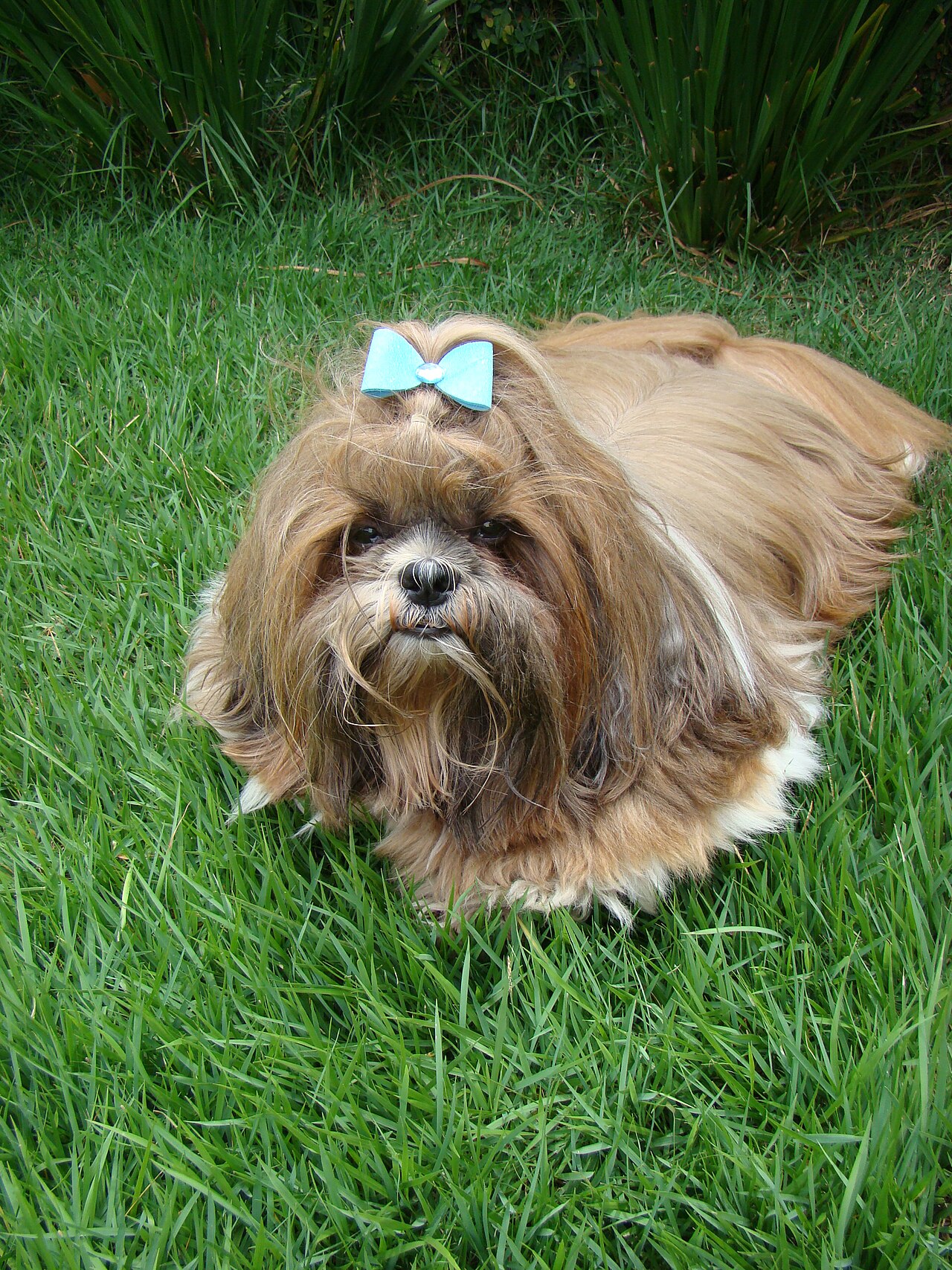
Shih Tzu
Also known as Shih Tzu, Chinese Lion Dog, Chrysanthemum Dog · Reviewed Jul 19, 2026
The Shih Tzu is an affectionate Toy companion whose fine long drop coat requires daily line brushing, complete drying, and professional bath-and-brush-out or clipper pet grooming every four to six weeks.
Overview
The Shih Tzu is a compact Toy companion with a luxurious long, flowing drop coat that requires consistent brushing, complete drying, and professional finishing. Correct breed grooming follows bath-and-brush-out with minor trimming to preserve a natural long-haired presentation. Common pet practice adds clipper trimming for easier maintenance. The grooming goal is a mat- and tangle-free coat that feels light and airy, moving freely with the dog. Ears are typically left long, with head styles ranging from a gathered topknot to rounded pet faces. Friction areas — collar line, armpits, behind the ears, legs, and thighs — need systematic line brushing to the skin. Pads are always trimmed with a #10 blade, with feet finished round and the undercarriage lightly neatened. All coat colors, patterns, and markings are accepted. Because the coat is fine and straight, incomplete brushing or drying quickly leads to hidden matting close to the skin.
History & Origins
Ancient breed developed in Tibetan monasteries and refined by imperial breeders in Chinese palace courts. Believed to descend from Tibetan breeds, possibly crosses between Lhasa Apso and Pekingese, prized as house pets for centuries
Photo Gallery
Real Shih Tzu photos — tap any image to enlarge. Photo credits are shown in the enlarged view.
Characteristics & Traits
Breed Traits
Physical Traits
Drooling level
Shedding level
Coat grooming frequency
Social & Family
Playfulness level
Adaptability level
Openness to strangers
Watchdog protective nature
Good with other dogs
Good with young children
Affectionate with family
Personality
Energy level
Barking level
Trainability level
Mental stimulation needs
Exercise & Training
Aim for around 40–60 minutes of total activity per day. Split activity into several short, low-intensity outings rather than one long session. As a brachycephalic breed, the Shih Tzu should never be pushed hard in heat or humidity.
Daily Walks by Living Situation
Apartment or Home Without a Backyard
3 walks / day
~20 min each
Three relaxed walks of 15–20 minutes work well for apartment living, plus short indoor play sessions.
Home With a Backyard
2 walks / day
~20 min each
With yard access, 1–2 daily walks of about 20 minutes are enough — yard time supplements but doesn't replace walks.
Daycare or Park Time?
A daycare day typically covers the Shih Tzu's exercise needs — you can skip the usual walks on those days. One to two daycare days per week is ideal for socialization without overexertion.
Brachycephalic (flat-faced) breed: avoid strenuous exercise in hot or humid weather. Shih Tzus overheat easily and can develop breathing difficulty — walk during cooler hours and always provide water and shade.
Training
- Keep training sessions short (5–10 minutes) — Shih Tzus lose focus quickly but respond well to frequent, upbeat practice.
- Use high-value treats and positive reinforcement; harsh corrections shut this breed down.
- Expect house training to take longer than average — stay consistent and patient with a fixed routine.
- Start socialization and gentle handling early, especially around the face and paws, to make lifelong grooming easier.
For Pet Parents
The Shih Tzu is an affectionate Toy companion whose fine long drop coat requires daily line brushing, complete drying, and professional bath-and-brush-out or clipper pet grooming every four to six weeks.
Grooming Commitment
Low shedding does not mean low maintenance.
A low-shedding drop coat is not a low-maintenance coat. The Shih Tzu requires consistent line brushing, complete drying, and professional grooming throughout its life.
- Shih Tzus need regular grooming even though they shed relatively little.
- Brushing must reach the skin to prevent hidden matting in friction areas.
- Discuss ear and tail preferences with your groomer before each substantial style change.
- A shorter trim may be recommended when the coat is severely tangled.
- Daily brushing supports natural long coat; shorter styles reduce home maintenance but still need professional care.
- Eye-area staining is common and may improve with consistent face care and professional maintenance.
At-Home Basics
- Difficulty
- high
- Shedding
- Low
- Brushing
- Daily for natural long coat; several times per week for shorter pet trims
- Pro Grooming?
- Yes
- Pro Frequency
- Every 4–6 weeks
Caring for Your Shih Tzu at Home
Brushing
Line brush in sections from skin to tip using pat-and-pull technique.
Brushing
Follow brushing with a metal comb to the skin.
Chest & thigh brushing
Check collar area, armpits, behind the ears, legs, thighs, and tail base.
Professional grooming schedule
Keep the stop area and eyes clean between appointments.
Maintain topknot sections
Maintain topknot sections for stability on natural long coat.
Nail trimming
Trim nails between appointments when needed.
Avoid bathing a matted coat at home
Avoid bathing a matted coat at home.
Professional grooming schedule
Schedule professional grooming before the coat becomes difficult to manage.
Ownership Profile
- First-time Owner
- Good with commitment
- Alone Time Tolerance
- Low to moderate
- Handling Sensitivity
- Moderate
- Apartment Friendly
- Yes
- City Friendly
- Yes
Best Suited For
- Owners prepared for frequent coat maintenance
- Apartment and city households
- Families seeking an affectionate companion
- Owners comfortable with professional grooming every four to six weeks
- Households able to provide daily brushing for long coat styles
May Not Suit
- Owners seeking a low-maintenance coat
- Homes unable to maintain daily brushing for natural long coat
- Owners unwilling to discuss and maintain ear and tail preferences
- Households expecting a highly athletic working dog
Mistakes to Avoid
- Brushing only the outer coat without line brushing and combing to the skin.
- Removing substantial ear or tail length without discussing options with the owner first.
- Attempting to preserve length through prolonged or painful dematting.
When to Call in a Professional
Leave full grooming — bathing, complete drying, deshedding, and any trimming — to a professional groomer every 4–6 weeks. It keeps the coat healthy and comfortable between visits.
History
The Shih Tzu is associated with Tibetan companion-dog traditions and later became closely linked with Chinese imperial court life as a palace companion. The breed was developed for companionship rather than field work, with emphasis on a luxurious long coat and an affectionate temperament. Modern Shih Tzus retain the long flowing coat that defines the breed's appearance, although most companion dogs are maintained in practical pet styles. Professional grooming has always been part of responsible Shih Tzu care because the fine drop coat mats easily without systematic brushing and complete drying.
Temperament
Affectionate, outgoing, alert, adaptable, and companion-oriented.
Shih Tzu Coat
The Shih Tzu carries a fine, straight, long-flowing drop coat that naturally falls toward the ground rather than standing away from the body.
When brushed up or fluffed, the coat tends to drop back down, which is characteristic of drop-coat breeds such as Shih Tzus, Lhasa Apsos, and Maltese.
Loose hairs are often retained within the coat, contributing to low visible shedding but high matting risk when brushing and drying are incomplete.
All coat colors, patterns, and markings are accepted. Coat presentation may range from natural long-haired maintenance to rounded pet styles or shorter bladed all-over trims.
The finished coat should look light, airy, and free-moving — not heavy, packed, or tangled close to the skin.
- Type
- Silky
- Family
- Drop coat
- Structure
- Single long
- Density
- Moderate to high
- Undercoat
- No
- Shedding
- Low
- Seasonal Change
- Minimal
- Matting Risk
- Very high
- Drying Difficulty
- Moderate to high
- Water Retention
- Moderate to high
- Growth Pattern
- Continuous
- Breakage Risk
- Moderate
Common Problem Areas
Groomer's Guide
Technical reference for professional groomers — specifications and standard operating procedures intended for certified groomers.
Goal: Maintain a mat- and tangle-free coat
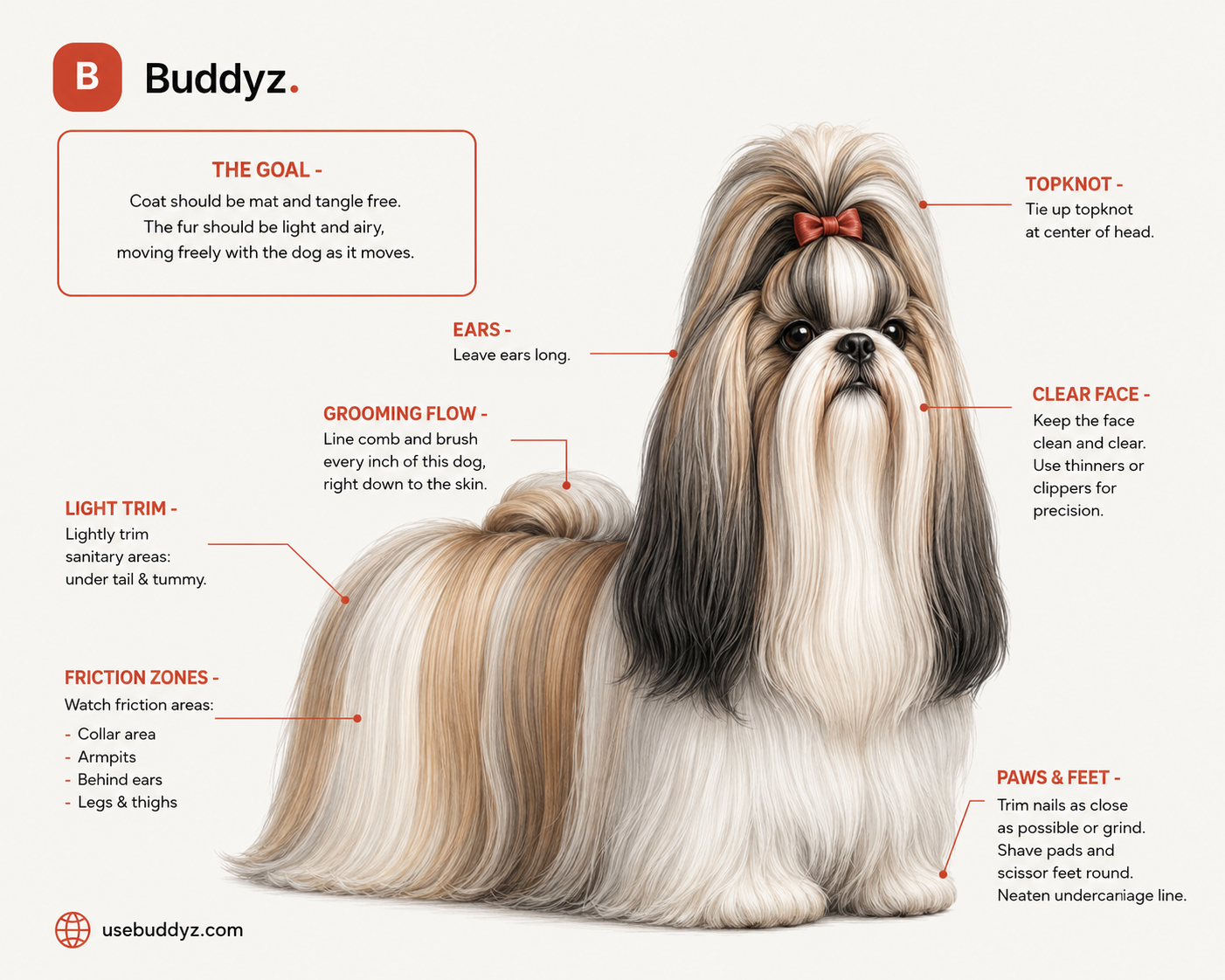
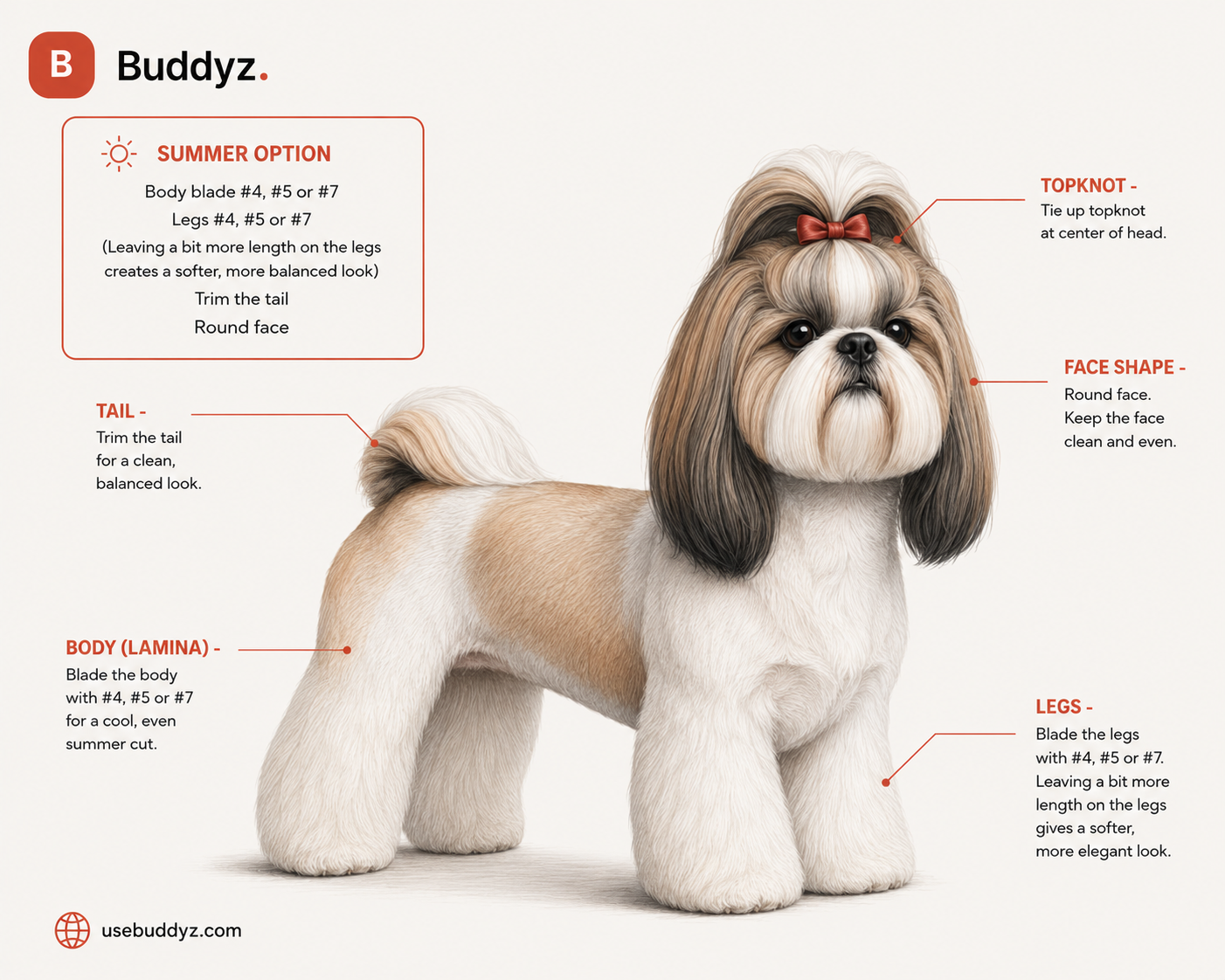
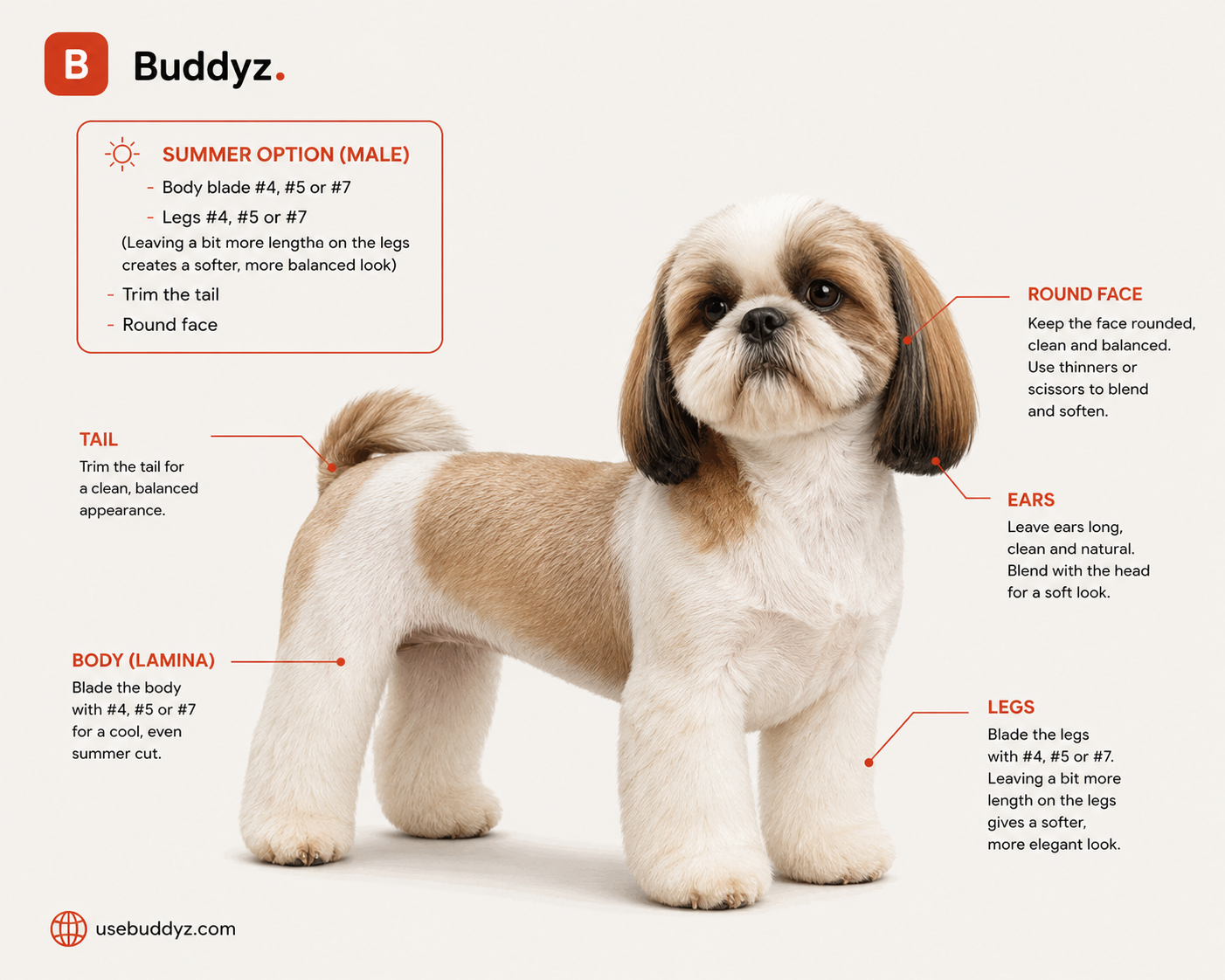
Traditional long coat — grooming reference with key areas: topknot, ears, face, friction zones, sanitary trim, paws & feet.
Tools Required
- Slicker brush
- Pin brush
- Greyhound comb
- Professional clippers
- #10 blade for pads
- Guard comb attachments
- Straight shears
- Curved shears
- Small detailing shears
- Thinning shears
- High-velocity dryer
- Nail trimmers or grinder
- Styptic powder
- Ear cleaning solution
- Ear powder
- Hemostat
- Cotton balls
- Coat polish mist
- Anti-static spray or light water mist
Pre-Bath Prep
- Trim or grind nails every four to six weeks to maintain healthy foot structure.
- Clean the ears by swabbing with a mild ear-cleaning solution.
- Pluck long hair inside the ear canal with ear powder and fingers or a hemostat when present and appropriate.
- Quickly go over the entire body and remove serious mats or tangles before bathing.
- Leave tangles that can be penetrated with water and address them when the dog is clean.
- If the dog is in a clipped pet trim and has not been professionally groomed for six weeks or more, remove excessive body coat and set the pattern before bathing.
- Discuss ear and tail options before any substantial length is removed.
Before Grooming
- Overall coat length and texture
- Matting severity and location
- Friction-area density behind ears, armpits, collar, and thighs
- Stop-area coat obscuring the eyes
- Topknot condition and stability
- Ear length preference and food-bowl interference
- Tail style preference
- Skin condition under dense coat
- Nail length and foot structure
- Ear condition and plucking needs
- Time since last professional grooming
- Requested trim style and home brushing routine
Consultation Notes
- Confirm whether the owner wants natural long coat, puppy or teddy-bear round head, or bladed all trim.
- Discuss ear length options before removing substantial coat — many owners are sensitive about ear and tail style.
- Explain that severely matted coat may require a shorter reset trim.
- Ask about topknot preferences and daily home brushing ability.
- Set expectations for stop-area trimming on pet dogs to keep eyes clear.
- Review bath frequency goals from once weekly to once every twelve weeks.
Preparation Objectives
- Identify matting and friction-area density before the bath
- Establish a realistic trim plan with the owner
- Prepare nails, ears, and serious tangles before bathing
- Set coat pattern before bathing when a clipped pet trim is overdue
Recommended Actions
- Trim or grind nails every four to six weeks to maintain healthy foot structure.
- Clean the ears by swabbing with a mild ear-cleaning solution.
- Pluck long hair inside the ear canal with ear powder and fingers or a hemostat when present and appropriate.
- Quickly go over the entire body and remove serious mats or tangles before bathing.
- Leave tangles that can be penetrated with water and address them when the dog is clean.
- If the dog is in a clipped pet trim and has not been professionally groomed for six weeks or more, remove excessive body coat and set the pattern before bathing.
- Discuss ear and tail options before any substantial length is removed.
Preparation Warnings
- Do not assume surface brushing has cleared the coat to the skin.
- Do not promise a long natural finish before assessing matting close to the skin.
- Do not remove substantial ear or tail length without owner approval.
- Refer persistent ear odor, discharge, redness, swelling, or pain to a veterinarian.
Objectives
- Clean the coat thoroughly without leaving product residue
- Soften and separate fine drop coat for effective drying
- Prepare the coat for brush-out, minor trimming, or clipper work
Process
- Follow natural long-haired bathing and drying protocols for drop coats.
- Wet the coat thoroughly to the skin.
- Apply shampoo appropriate for skin and coat condition.
- Rinse completely, paying attention to dense areas on legs, chest, and undercarriage.
- Apply conditioner when the coat feels dry, tangled, or needs extra slip for combing.
- Rinse until the coat feels clean and free of residue.
- Gently remove excess water without rubbing the coat into tangles.
Product Guidance
- Choose products based on skin sensitivity and coat dryness, not coat color alone.
- Heavy products may weigh down the airy finish desired on natural long coat.
- Insufficient rinsing can cause irritation and make post-bath brushing more difficult.
Breed Specifics
- Bathe as often as once weekly to once every twelve weeks depending on lifestyle and coat condition.
- Prevent water from entering the nose and ears.
- Support the dog securely on wet surfaces.
- Monitor body temperature throughout the service, especially on brachycephalic individuals.
Drying Objectives
- Dry the coat completely to the skin
- Separate fine straight coat so each strand moves freely
- Locate remaining tangles before trimming or topknot work
- Prepare an even surface for minor trimming, scissoring, or clipper finishing
Drying Methods
- Controlled high-velocity drying in sections
- Line brushing during drying using pat-and-pull technique
- Comb checking after the coat is fully dry and cool to the skin
Drying — Breed Specifics
- Pay extra attention to collar area, armpits, behind the ears, legs, thighs, and tail base.
- Do not begin finish work until the coat is completely dry.
- If static electricity is a problem while brushing, lightly mist with anti-static product or water.
- When finished, each strand of hair should float freely as the dog moves.
Drying Quality Standard
The coat should be fully dry, combable to the skin, and free of hidden tangles before topknot, stop-area, foot, or body finishing begins.
Techniques
- Line brushing
- Bath and brush-out
- Minor trimming
- Clipper trim
- Scissor finishing
- Topknot gathering
- Sanitary maintenance
Common Trims
- Natural Long Coat
- Puppy Cut / Teddy Bear
- Bladed All Trim
- Sanitary Maintenance Trim
Clipper Areas
- Pad trimming
- Sanitary trimming under tail and tummy
- Stop-area clearing on pet dogs
- Optional bladed all trim body work
- Guard-comb body and rump setting for drop-coat pet styles
- Blending transitions between clipped body and scissored legs
Scissor Areas
- Topknot framing
- Stop area
- Round head styles
- Muzzle bevel
- Ears
- Feet
- Undercarriage line
- Leg columns
- Tail
- Transition blending
Scissoring — Primary Areas
- Topknot framing
- Stop area
- Round head styles
- Muzzle bevel
- Ears
- Feet
- Undercarriage line
- Leg columns
- Tail
- Transition blending
Scissoring — Finish Goals
- Natural, soft, stuffed-animal appearance on pet trims
- Rounded feet facing forward
- Smooth transitions without visible scissor or clipper marks
- Balanced head with eyes and nose centered in round styles
- Light airy coat moving freely with the dog
Scissoring — Breed Specifics
- Block the foot square first, then round with curved shears while the dog stands naturally.
- Frame the eyes with a soft arch well blended into the head piece.
- Bevel the muzzle evenly and buffer edges into a soft, neat line.
- Use thinning shears to soften the framed eye area and trouble spots around ears, flank, and tail.
- Finish with a fine mist of coat polish on the body coat for added shine when appropriate.
- On round head styles, comb hair forward over the eyes and scissor at a 45-degree angle from the stop to create a deep-set eye appearance.
Clipper Work — Common Uses
- Pad trimming
- Sanitary trimming under tail and tummy
- Stop-area clearing on pet dogs
- Optional bladed all trim body work
- Guard-comb body and rump setting for drop-coat pet styles
- Blending transitions between clipped body and scissored legs
Clipper Safety Notes
- Use a #10 blade for pad trimming regardless of body blade selection.
- Use a very light touch when cleaning pads of long hair.
- Confirm blade temperature frequently, especially on fine coat and sensitive skin.
- Use extra care around the stop area, eyelids, lips, toes, and sanitary regions.
- Feather off blending areas slowly to avoid clipper tracking.
- Coat condition and safety take priority over the requested length.
Equipment
- #10 blade for pads
- #10 or #15 blade for stop area when appropriate
- #4F blade
- #5F blade
- #7F blade
- #1 guard comb
- #1.5 guard comb
- #2 guard comb
- Thinning shears for natural blending
Blade & Length Selection
- Owner preference for natural long coat vs clipper pet trim
- Coat condition and matting severity
- Desired finished length and maintenance interval
- Skin sensitivity around face and sanitary areas
- Season, lifestyle, and home brushing ability
- Ear and tail style choices
Common Pet Trim Styles
- Natural Long Coat — Bath-and-brush-out with minor trimming: line brushed coat left long and airy, topknot gathered at the center of the skull, ears left long, light sanitary trim, #10 pad work, and rounded feet.
- Puppy Cut / Teddy Bear — A soft, cuddly pet style with a rounded head, optional shorter body length, and blended legs. Stop area trimmed close with thinners or a close blade; eyes framed with a soft arch.
- Bladed All Trim — Popular low-maintenance warm-weather option using moderate-length blades and guard combs following body contours, with repeated passes for smooth even coat on body and legs.
- Sanitary Maintenance Trim — Focused service between full grooms: light sanitary trim under tail and tummy, pad and nail care, stop-area touch-up, and friction-area brush-out without changing overall coat length.
Style Selection Factors
- Owner preference for natural long coat vs shorter maintenance
- Home brushing ability and daily time commitment
- Coat condition and matting history
- Climate and lifestyle
- Ear and tail sensitivity and preferred lengths
- Desired professional grooming schedule
- Dog's comfort with face and foot handling
Head
Gather the topknot at the center of the skull for stability and breed character Clear the stop area between the eyes on pet dogs for comfort and expression Keep eyes and nose balanced within round head styles Maintain a soft, kind expression without heavy coat obscuring vision
Single-section topknots that slip out quickly Stop area left too heavy, causing eye irritation Over-trimming the framed eye area and losing soft expression Uneven round head shape on pet styles
Ears
Leave ears long in natural long-coat grooming unless the owner requests otherwise. Discuss ear length options before cutting — owners are often sensitive about ear style. Trimming ears to nose length balances the head and reduces food- and water-bowl interference. Use thinning shears to create a soft line over the top of the ears when defining them. Pull ears forward and check behind and under the ears for missed or long hairs. Confirm both ears are equal in length when trimmed.
Do not remove substantial ear length without explicit owner approval. Do not diagnose or treat suspected ear infection. Refer persistent odor, discharge, redness, swelling, or pain to a veterinarian.
Feet
Trim pads with a #10 blade using a very light touch. Block in the foot square while standing to create a full circular shape with toes pointing forward. Finish detailing and rounding the outline with long curved shears. Softening with thinning shears is optional for a natural edge. Trim nails as close as practical or grind every four to six weeks.
Small toes are easily nicked during rounding. Overgrown nails affect posture and the ability to shape a round foot. Cutting up into the side coat of the foot during pad work creates visible breaks.
Tail
Keep the tail in balance with the overall dog and selected trim Discuss tail options with the owner before removing substantial length Prevent matting at the tail base and under the tail Maintain a neat sanitary area under the tail
Always confirm tail preferences before substantial trimming — coat cannot be replaced once removed.
Sanitary Area
Lightly trim sanitary areas under the tail and tummy Maintain hygiene without unnecessary close clipping Blend naturally into surrounding coat on long styles
ears
very_highMaintenance
- -Leave ears long in natural long-coat grooming unless the owner requests otherwise.
- -Discuss ear length options before cutting — owners are often sensitive about ear style.
- -Trimming ears to nose length balances the head and reduces food- and water-bowl interference.
- -Use thinning shears to create a soft line over the top of the ears when defining them.
- -Pull ears forward and check behind and under the ears for missed or long hairs.
- -Confirm both ears are equal in length when trimmed.
Styles
- -Long natural ears — breed-standard presentation
- -Ears trimmed to nose length for balance and sanitary reasons
- -Rounded or blunt-cut ear tips
- -Short clipped ears when owner prefers low maintenance
- -Tasseled or plume ear styles on longer trims
Risks & Warnings
- -Do not remove substantial ear length without explicit owner approval.
- -Do not diagnose or treat suspected ear infection.
- -Refer persistent odor, discharge, redness, swelling, or pain to a veterinarian.
feet
highMaintenance
- -Trim pads with a #10 blade using a very light touch.
- -Block in the foot square while standing to create a full circular shape with toes pointing forward.
- -Finish detailing and rounding the outline with long curved shears.
- -Softening with thinning shears is optional for a natural edge.
- -Trim nails as close as practical or grind every four to six weeks.
Styles
- -Rounded natural feet
- -Forward-facing toes with soft circular outline
- -Feet blended into longer leg coat on natural styles
Risks & Warnings
- -Small toes are easily nicked during rounding.
- -Overgrown nails affect posture and the ability to shape a round foot.
- -Cutting up into the side coat of the foot during pad work creates visible breaks.
head
very_highGoals
- -Gather the topknot at the center of the skull for stability and breed character
- -Clear the stop area between the eyes on pet dogs for comfort and expression
- -Keep eyes and nose balanced within round head styles
- -Maintain a soft, kind expression without heavy coat obscuring vision
Topknot Technique
- -Gather the topknot into a single ponytail at the center of the skull.
- -Build the topknot from multiple smaller sections gathered into one for longer-lasting stability.
- -Use bands or bows only after the coat is fully brushed and tangle-free.
- -Leave enough coat at the back corners of the eyes to frame the face in trimmed styles.
Styles
- -Natural long coat with gathered topknot
- -Topknot with cleared stop area on pet dogs
- -Rounded puppy cut or teddy-bear head
- -Blended round head on guard-comb or bladed body trims
Risks & Warnings
- -Single-section topknots that slip out quickly
- -Stop area left too heavy, causing eye irritation
- -Over-trimming the framed eye area and losing soft expression
- -Uneven round head shape on pet styles
tail
mediumGoals
- -Keep the tail in balance with the overall dog and selected trim
- -Discuss tail options with the owner before removing substantial length
- -Prevent matting at the tail base and under the tail
- -Maintain a neat sanitary area under the tail
Styles
- -Long natural tail
- -Tail trimmed to owner-preferred length
- -Tufted or plume tail styles
- -Tail balanced to overall trim length on pet styles
Risks & Warnings
- -Always confirm tail preferences before substantial trimming — coat cannot be replaced once removed.
sanitary Area
highGoals
- -Lightly trim sanitary areas under the tail and tummy
- -Maintain hygiene without unnecessary close clipping
- -Blend naturally into surrounding coat on long styles
Notes
- -Sanitary maintenance is typically light and should preserve the natural long-coated appearance.
High-Risk Areas
- Collar area
- Armpits
- Behind the ears
- Inner thighs and legs
- Undercarriage
- Tail base
- Between the toes
Challenges
- Matting and tangling in friction areas despite surface brushing
- Eye staining and moisture under the eyes
- Topknot slipping out or failing to stay centered
- Owner sensitivity about ear and tail length changes
- Maintaining a light airy coat rather than a packed, heavy finish
- Stop area becoming overgrown between appointments
- Incomplete drying leading to hidden tangles
- Owner requests for long styles on severely matted coats
- Beginning trim or topknot work while moisture remains in the coat.
- Using one small topknot section that slips out quickly instead of gathering multiple sections.
- Leaving the stop area too heavy on pet dogs, causing eye irritation and poor expression.
- Using blades other than #10 for pad trimming.
- Stopping after blocking the foot square without finishing the rounded forward-facing outline.
- Feathering too quickly in shoulder, rump, or leg transitions and leaving visible tracking.
Management Principles
- Line brush and comb every inch to the skin before judging coat condition.
- Discuss ear and tail options before removing substantial length.
- Use multi-section topknot gathering for better stability.
- Clear the stop area on pet dogs when coat interferes with vision.
- Set realistic expectations when matting requires a shorter reset.
- Prioritize coat health and comfort over maximum length preservation.
Pro Tips
- Use pat-and-pull line brushing: pat with the full slicker pad, then pull out and away with a neutral wrist.
- Do not advance to the next section until the brush glides smoothly and skin is visible at the seam line.
- Build the topknot from multiple smaller ponytail sections gathered at the center of the skull for longer hold.
- Clear the stop area with thinners or a close blade on pet dogs so eyes stay comfortable and expressive.
- Discuss ear and tail length with the owner before cutting — it is easier to remove more later than to replace length.
- Block feet square while standing, then round with curved shears for a natural forward-facing foot.
- Trim pads with a #10 blade only, using a very light touch.
- Lightly mist with anti-static product or water if static interferes with line brushing.
- Finish trouble spots — stop, ears, under front legs, feet, flank, and under tail — with thinning shears.
- Apply a fine coat polish mist on the body when a natural shiny finish is desired.
- If a clipped pet dog is six or more weeks overdue, set the pattern before bathing.
Assessment Priority
Keep the coat mat-free, light, and airy while matching finish style to owner maintenance ability
groomingBrachycephalic Risk: Shih Tzus are flat-faced. Keep them cool during drying and closely monitor breathing. NEVER place them in a heated cage dryer. They are also highly prone to eye injuries; use extreme caution with shears around the facial area.
Frequently Asked Questions
Ready to book your Shih Tzu's grooming session?
Connect with a Buddyz professional to schedule online in minutes.
Not the right match?
Continue exploring our directory to find the perfect breed for your lifestyle.
Are you a professional?
Use Buddyz to manage your salon, understand complex coats, and educate pet parents.