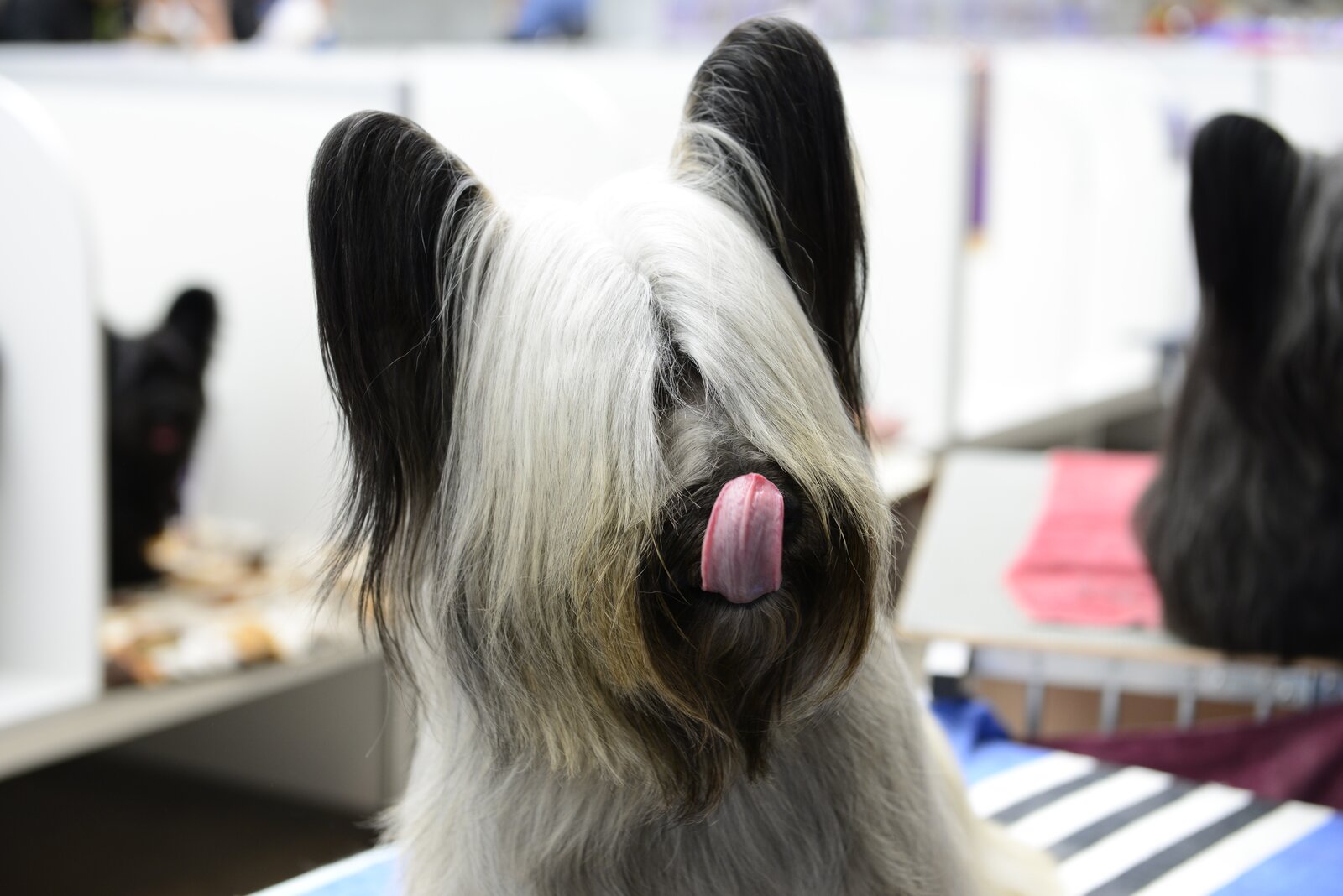
Skye Terrier
Also known as Skye Terrier
The Skye Terrier is an alert, energetic terrier whose silky coat needs regular professional grooming and consistent home care.
Overview
The Skye Terrier is a small terrier with a silky coat and strong working instincts. Most owners appreciate the breed's personality, but the coat requires regular bathing and brushing to stay clean and comfortable. The breed standard calls for brush out / minor trimming, though many companion dogs receive bath & brush / clipper trim instead. Consultation should clarify whether the owner wants a traditional finish or a practical pet trim.
History & Origins
Developed on the Isle of Skye in Scotland for hunting fox, otter, and vermin in rocky terrain. Gained popularity in the 19th century when Queen Victoria became a fancier. Made famous by Greyfriars Bobby in Edinburgh. Recognized by AKC in 1887.
Characteristics & Traits
Breed Traits
Physical Traits
Drooling level
Shedding level
Coat grooming frequency
Social & Family
Playfulness level
Adaptability level
Openness to strangers
Watchdog protective nature
Good with other dogs
Good with young children
Affectionate with family
Personality
Energy level
Barking level
Trainability level
Mental stimulation needs
For Pet Parents
The Skye Terrier is an alert, energetic terrier whose silky coat needs regular professional grooming and consistent home care.
Grooming Commitment
Terrier coat care is ongoing — plan for regular appointments.
A silky terrier coat still needs consistent care between professional appointments.
- Skye Terriers need regular grooming even when they look neat at home.
- Trim pads with a #10 blade at every professional appointment.
At-Home Basics
- Difficulty
- high
- Shedding
- Low to moderate
- Brushing
- Weekly
- Pro Grooming?
- Yes
- Pro Frequency
- Every 4–8 weeks
Caring for Your Skye Terrier at Home
Brushing
Brush furnishings and friction areas regularly.
Feet & toe checks
Check ears, nails, and feet between appointments.
Professional grooming schedule
Schedule professional grooming before the coat becomes unmanageable.
Ownership Profile
- First-time Owner
- Good with commitment
- Alone Time Tolerance
- Low to moderate
- Handling Sensitivity
- Moderate
- Apartment Friendly
- Yes
- City Friendly
- Yes
Best Suited For
- Active owners committed to regular grooming
- Households that enjoy training and engagement
- Owners who understand terrier temperament
- Homes able to provide daily exercise
May Not Suit
- Owners seeking a low-maintenance coat
- Homes expecting a completely quiet dog
- Owners unable to maintain grooming appointments
Mistakes to Avoid
- Assuming the owner wants a traditional finish without discussing maintenance expectations.
- Over-handling sensitive smooth skin.
When to Call in a Professional
Leave full grooming — bathing, complete drying, deshedding, and any trimming — to a professional groomer every 4–8 weeks. It keeps the coat healthy and comfortable between visits.
History
The Skye Terrier was developed in Scotland for vermin control and terrier work requiring courage and determination. Breed selection emphasized a coat suited to the dog's working environment and a compact, agile build. Modern grooming preserves breed character while adapting to companion lifestyles. Professional groomers should understand both traditional and pet-maintenance approaches for this breed.
Temperament
Alert, confident, spirited, loyal, and intelligent.
Skye Terrier Coat
The Skye Terrier has a silky coat suited to its breed type.
Regular bathing and brushing keep the coat clean, flat, and comfortable.
Most maintenance focuses on hygiene, nails, ears, and light detailing.
Professional grooming supports coat health rather than heavy sculpting.
- Type
- Silky
- Family
- Long coat
- Structure
- Single
- Density
- Moderate
- Undercoat
- No
- Shedding
- Low to moderate
- Seasonal Change
- Minimal
- Matting Risk
- Moderate
- Drying Difficulty
- Moderate
- Water Retention
- Moderate
- Growth Pattern
- Continuous
- Breakage Risk
- Low
Common Problem Areas
Groomer's Guide
Technical reference for professional groomers — specifications and standard operating procedures intended for certified groomers.
Goal: Maintain healthy skin and coat
Tools Required
- Slicker brush
- Greyhound comb
- Professional clippers
- Thinning shears
- Nail clippers or grinder
- Ear cleaning solution
- High-velocity dryer
Pre-Bath Prep
- Massage the coat with a rubber curry to remove loose fur.
- Trim or grind nails every four to six weeks.
- Swab ears with a mild ear-cleaning solution and note any concerns.
- Confirm desired trim style with the owner.
Before Grooming
- Coat texture and density
- Undercoat level
- Matting in furnishings
- Skin condition
- Previous clipper or strip work
- Nail and pad condition
- Ear condition
- Requested trim style
Consultation Notes
- Confirm traditional hand strip vs clipper pet trim.
- Confirm whether whisker removal is requested.
- Review home brushing routine.
- Set realistic expectations for coat color and texture.
Preparation Objectives
- Assess coat condition
- Confirm trim plan
- Prepare coat for bathing
- Protect skin and comfort
Recommended Actions
- Massage the coat with a rubber curry to remove loose fur.
- Trim or grind nails every four to six weeks.
- Swab ears with a mild ear-cleaning solution and note any concerns.
- Confirm desired trim style with the owner.
Preparation Warnings
- Do not promise a long traditional finish before assessing coat condition.
- Refer persistent ear or skin concerns to a veterinarian.
Objectives
- Clean coat thoroughly
- Remove odor and debris
- Prepare for drying and finishing
Process
- Fully saturate the coat.
- Shampoo according to skin and coat condition.
- Rinse completely.
- Condition when appropriate for coat type.
- Remove excess water without rough rubbing.
Product Guidance
- Choose products based on skin sensitivity, not coat color alone.
Breed Specifics
- Smooth coats benefit from curry brushing before and after bathing.
Drying Objectives
- Dry completely
- Separate coat for inspection
- Prepare for finish work
Drying Methods
- High-velocity drying in sections
- Line brushing for longer coats
- Comb check after drying
Drying — Breed Specifics
- Do not begin finish work until the coat is fully dry to the skin.
Drying Quality Standard
The coat should be fully dry and combable before trimming or stripping detail work begins.
Techniques
- Line brushing
- Bath and brush
- Light trimming
- Scissor finish
Common Trims
- Pet Maintenance Trim
Clipper Areas
- Sanitary trimming
- Pad trimming
- Light detailing
Scissor Areas
- Beard
- Eyebrows
- Leg furnishings
- Feet
- Tail
- Head blending
Scissoring — Primary Areas
- Beard
- Eyebrows
- Leg furnishings
- Feet
- Tail
- Head blending
Scissoring — Finish Goals
- Natural terrier outline
- Invisible pattern lines
- Neat feet
- Balanced head
Scissoring — Breed Specifics
- Keep smooth breeds neat with minimal scissoring.
Clipper Work — Common Uses
- Sanitary trimming
- Pad trimming
- Light detailing
Clipper Safety Notes
- Trim pads with a #10 blade regardless of other blade choices.
- Use caution on sensitive smooth skin.
- Remove whiskers only if the client requests.
Equipment
- #10 blade for pads
- Small detailing shears
- Thinning shears
Blade & Length Selection
- Owner preference
- Coat condition
- Skin sensitivity
- Traditional vs pet trim
Common Pet Trim Styles
- Pet Maintenance Trim — A practical Skye Terrier trim focused on cleanliness, comfort, and breed-appropriate outline.
Style Selection Factors
- Owner maintenance ability
- Coat condition
- Traditional vs pet preference
- Budget and appointment frequency
Head
Preserve breed expression Keep vision clear
Over-clipping wire texture Uneven eyebrows
Ears
Inspect and clean ears Neaten ear leather when appropriate
Refer infection signs to a veterinarian
Feet
Trim pads with a #10 blade Remove hair between pads Round or neaten feet according to breed style
Sensitive pads on close clipper work
Tail
Maintain balance with body trim Keep sanitary area clean
Sanitary Area
Maintain hygiene Avoid irritation
ears
moderateMaintenance
- -Inspect and clean ears
- -Neaten ear leather when appropriate
Risks & Warnings
- -Refer infection signs to a veterinarian
feet
highMaintenance
- -Trim pads with a #10 blade
- -Remove hair between pads
- -Round or neaten feet according to breed style
Risks & Warnings
- -Sensitive pads on close clipper work
head
highGoals
- -Preserve breed expression
- -Keep vision clear
Styles
- -Natural terrier head
- -Hand stripped head
- -Clipper pet head
Risks & Warnings
- -Over-clipping wire texture
- -Uneven eyebrows
tail
moderateGoals
- -Maintain balance with body trim
- -Keep sanitary area clean
sanitary Area
highGoals
- -Maintain hygiene
- -Avoid irritation
High-Risk Areas
- Beard
- Leg furnishings
- Behind the ears
- Armpits
- Sanitary area
- Feet
Challenges
- Owner expectations for traditional vs clipper finish
- Sensitive skin during close work
- Using blades other than #10 for pad trimming.
Management Principles
- Consult before choosing strip vs clip.
- Prioritize comfort and coat health.
- Blend transitions invisibly.
- Document coat texture changes for returning clients.
Pro Tips
- Trim pads with a #10 blade.
- Confirm trim style before starting.
- Document coat texture and owner preferences.
Assessment Priority
Preserve terrier outline and coat health
Ready to book your Skye Terrier's grooming session?
Connect with a Buddyz professional to schedule online in minutes.
Not the right match?
Continue exploring our directory to find the perfect breed for your lifestyle.
Are you a professional?
Use Buddyz to manage your salon, understand complex coats, and educate pet parents.